John Reade, Irish Canadian Poet.

John Reade. 1837-1919

Although born in Ballyshannon, John Reade’s parents, Joseph Reade and Mary John Reade came from Pettigo. He emigrated to Canada in 1856 where he became one of the best known Canadian poets of the latter half of the 19th century.  At his death he was described as “The Dean of Canadian Literature.” He became general editor of the Montreal Gazette and held this position for the rest of his life. In 1870 he published a much acclaimed volume of verse entitled “The Prophecy of Merlin and other Poems”. This volume made his name in Canada. He was a wonderful linguist and translated poetry from Latin, Greek, Italian and French. He died unmarried and is buried in Montreal. John Reade took a keen interest in Canadian politics and fervently supported the idea of Canadian Confederation.John ReadeHe never forgot Ballyshannon and this poem about the town was in “Treasury of Canadian Verse” by Theodore H. Rand of Toronto in 1910 and in many other collections of verse. It is a lovely pen picture of Ballyshannon as he remembered it in the middle of the 19th century.

1.

Here is the old church.  Now I see it all –

The hills, the sea, the bridge, the waterfall.

The dear old sleepy town is still abed

Although the eastern clouds are tinged with red.

And everything is as of this graveyard still,

Except the soldiers at their morning drill,

And in the Pool a fishing boat or two

Belated, homeward pulled with weary oar,

And the dim curlews on the distant shore,

And the lark soaring through the ether blue.

And now the lazy smoke curls through the air –

I will go down and see who tenant there,

And meet old friends.  “First, wanderer, look around

And see what friends of thine are underground!


2.

The mountains gather round thee as of yore,

O holy lake, across whose tranquil breast,

Was borne the saint who to the farthest west

Brought the sweet knowledge that transcends all lore.

There on the islet at the chapel door

The penitents are kneeling, while along

There flows the mystic tide of sacred song

To where I stand upon the rugged shore.

But now there is a silence weird and dread –

And utter loneliness is in my heart.

It came to seek the living but the dead –

This is their welcome.  Slowly I depart,

Nor read the name beneath a single cross –

He still is rich who does not know his loss.


3.

There is the schoolhouse, there the lake, the lawn;

And there, just fronting it, the barrack square;

But of all those I knew not one is there –

Even the old gatekeeper – he is gone.

Ah, me! Ah me!  When last I stood upon

This grassy mound, with what proud hopes elate

I was to wrestle with the strength of fate

And conquer!  Now – I live and that is all.

Oh! happier those whose lot it was to fall

In noble conflict with their countries foes

Far on the shores of Taurie Chersonese!

Nay, all are blest who answer duty’s call,

But – do I dream our wake?  What ghosts are these?

Hush, throbbing heart!  These are the ghosts of those.


4.

Oh!  what could wake to life that first sweet flame

That warmed my heart when by the little bay

On blissful summer evenings I lay

Beneath our thorn-bush, waiting till she came

Who was for me far more than wealth or fame,

But yet for whom I wished all fair things mine,

To make her, if she could be, more divine

By outer splendour and a noble name.

Now I may wait in vain from early morn

Till sunset for the music of her feet.

And yet how little change has come upon

This fairy scene her beauty made so sweet!

It weareth still the glory of her smile.

Ah!  If she were but here a little while.

March 1916.

March 16th, 1916.  Promotion of Admiral Lowry.  British Command Orders intimates that the Admiralty have notified that in future the Admiral whose flag flies at Rosyth Naval Base will have the status of Commander-in-Chief.  Admiral Sir Robert Lowry, the present occupant of the post, accordingly becomes Commander-in-Chief at that base.  Admiral Lowry is a distinguished Ulsterman, being the eldest son of the late Lieutenant General Robert W. Lowry, C. B., of Aghnablaney, County Fermanagh. (Ed. Near Pettigo.) I.R.

March 16th, 1916.  NOTES.  A potato famine exists in German towns.  In the country districts there is no meat to be had.

The Don’t-want-to-Fight Men of England are being formed into a non-combat corps with the ordinary infantry pay but none of the working or proficiency pay.  The corps will perhaps generally be known as The Cowards Corps.

Women are appeal to by the Committee for War Savings to avoid elaboration and variety in dress, new clothes, and all forms of luxury, and not to motor for pleasure, to have less elaborate meals, cut down the number of servants and give up hothouses.

Liverpool dockers have refused to work with women.  The old-world prejudice of men was be broken down.  Women have as much right to live as men. I.R.

March 16th, 1916.  ENNISKILLEN AND DISTRICT.  A FERMANAGH WOMAN KILLED GOING TO THE WELL.  An inquest was held in the Railway Hotel, Enniskillen on Monday concerning the death of an old woman named Ann Maguire of Drumclay about ½ mile from the town, who was knocked down and killed by the 6.37 train from Enniskillen to Derry on Saturday evening.  The woman was about 75 years old, and was somewhat deaf.  She went to a well situated quite close to the railway line at Drumclay level crossing to get water.  She did not hear the train approach until it was upon her and she was struck by one of the carriages and knocked into the water channel at the side of the line.  Her right arm and practically all the ribs on the right side were broken.  Dr. Betty was immediately summoned but the woman died within 10 minutes.  The jury returned a verdict that the occurrence was purely accidental and that no blame was attached to any person. I.R.


March 16th 1916.  THE EXCEPTION TRIBUNALS AND HOW THEY WORK IN SCOTLAND.  OF 93 APPEALS; 90 ARE GRANTED.  A correspondent sends to The Times a newspaper a report of the sittings of Aberdeenshire tribunals to show how things are being run there.  The tribunal for Huntley District met on Saturday and heard appeals with the above results – only three refused.  A farmer asked exemption for his brother a ploughman.  The applicant said there were 320 acres.  There were six on the place and himself.  This was the only man of military age. The Chairman asked how is your father and was told he is very well. The Chairman said he is a wonderful man and I propose total exemption I know the family and their history.  Total exemption was granted.

Another farmer asked exemption for a son, a cattle man.  The applicant stated that there were 100 acres of arable and 14 of pasture.  He had two sons at home.  Major Gray said the Advisory Committee had refused his application, because the other son had been granted exemption.  The Chairman asked how are you to work the farm with girls?  Major Gray said you cannot believe all these details.  The Chairman said I know the family root and branch.  There is not a straighter man in Aberdeenshire than this.  A Member said I cannot vote against him I know him so well.  Exemption was granted. F.T.


March 16th 1916.  AND THE MAN WHO WOULD NOT SERVE ANY COUNTRY.  A young man of 21 who applied for total exemption at the Whitehaven tribunal said he was born in England but emigrated to the United States when he was 12.  Coming home to recruit his health in 1914, he was not allowed to return to America.  The chairman said that as a British subject you ought to be proud to have an opportunity of serving your country.  The applicant said I happen not to be proud to serve my country.  I would not serve any country.  The world is my country and if I do not like the laws of one country I go to another.  Application refused.

A conscientious objector said he was a Wesleyan and would not join the Army on any consideration. Replying to a question with regard to David being an instrument in God’s hands when slew Goliath in the war with the Philistines the applicant said God commanded that war but he did not command the present war.  The Mayor said how dare you sit there and say that?  He applicant said I am as certain as I sit here that the war is not a righteous war.  War of any kind as against a word of God.  I suppose you accept the protection of the British Crown?  Certainly not.  I take my protection from God above.  Well?  You’re not fit to live that’s all.  I’m certain I am but there are a lot of people not fit to live.  Exemption from combat service only granted.  F.T.


Fermanagh Herald March 18th 1916.  JOTTINGS.  A committee has been formed in Clones and £300 has already been subscribed to promote a memorial to the late Right Rev Monsignor O’Neill, P.P., V. F., Dean of Clogher.  The list is to be kept open for one month.


Private Thomas Kelly, Townhall St., Enniskillen, who joined the 8th Battalion Inniskilling Fusiliers, some five or six months ago, has, we regret to say been killed in action.  The notification was recently received by his sisters.  Private Kelly was previously employed by ex-County Inspector Maguire, and subsequently by the Scottish Corporative Wholesale Society, Enniskillen.  His death will cause profound regret among his relatives and friends.


March 23rd 1916.  POLICE OFFICERS SHOT.  WILD SCENES IN TULLAMORE IN THE FIGHT IN A SINN FEIN  HALL.  An affray in Tullamore on Monday night arising out of a hostile demonstration against the local Sinn Fein Volunteers by a section of the townspeople has had a sensational sequel.  The windows of the Sinn Fein hall were stoned and some of those in the hall replied to the attacks with revolver shots.  The police forced entrance to take away the arms from those using them.  The Sinn Feiners refused to be searched and fired on the police.  County Inspector Crane and Sergeant Ahearn were wounded by revolver bullets.  The former was hit on the cheek near the eye; the latter was so seriously wounded that he was removed to the local infirmary where he lies in a precarious condition.  The Sinn Fein premises have been wrecked.  Several arrests have been made including four prominent members of the Sinn Fein Volunteers.  Extra police have been drafted into the town. F.T.


March 23rd 1916.  ENNISKILLEN PROSECUTIONS.  The practice of depositing ashes and refuse on public thoroughfares in Enniskillen has recently been so greatly on the increase that the Urban Council have been compelled to take legal steps to put an end to it and on Monday they prosecuted three defendants, Mrs. Ann Somers, John Goodwin and James Morrison for having been guilty of this offence. The prosecution said there had been complaints that the roadway at the rear of Ann Street was being obstructed by parties throwing rubbish, ashes and old tin cans on it.  Somers was fined 2s 6d and costs, Goodwin five shillings and costs and Morrison two and six and costs.

At Enniskillen Petty Sessions under the Weights and Measures Act Andrew Parker, of Ann St., merchant was charged with having a weighing machine in his shop to one side of which a piece of lead had been attached making in register 1 ½ ounces against the customer.  Frederick Carson, a young assistant, in the defendant’s shop stated that he had attached the lead without Mr. Parker’s knowledge.  The chairman said that the Bench had taken a very lenient view of the case and decided to impose a fine of 10 shillings with three and six costs.


Fermanagh Herald March 25th 1916.  AIR RAID ON KENT.  Nine people were killed and 31 injured as four German seaplanes flew over East Kent today.  As far as we can ascertain 48 bombs were dropped altogether.  Three men, one woman and five children were killed and 17 men, five women, and nine children were injured.


Fermanagh Herald March 25th 1916.  ARMY ACCOUNTS.  NO OFFICIAL RECORDS OF SOME SOLDIERS EXIST.  CLOTHING DEALS: UNIFORMS WHICH COST £2,650 WERE RESOLD FOR £400.  A report by the Comptroller and Auditor General, which reveals the unsatisfactory condition of certain Army accounts, was issued on Saturday.  In all dealings with the Army and supplies, there is a considerable amount of muddle, as these vouchers are not infrequently missing or incomplete.  Forage, animal, fuel and light accounts for the period immediately preceding embarkation were not filled up. Up to February 12th 1916, no store accounts of transport vehicles had been furnished.  This is put down to extreme pressure in the earlier months of the war.  Horses arrived by rail at night with no voucher to show who sent them or the station from which they came, or with no identification labels.  Units transferred horses to other troops without vouchers, and one unit apparently had failed to keep accounts as no record could be found of receipt or disposal of animals.


The Comptroller refers to large quantities of clothing that had been written off as destroyed on the authority of Courts of Inquiry.  The papers showed that in September 1914, a firm offered a supply of part worn clothing for the use of the troops.  Purchase was effected, but shortly afterwards complaints were received as to the unsatisfactory condition of jackets and trousers, some being verminous and others threadbare.  Large quantities were ultimately condemned as unserviceable and returned to the ordnance officer, and together with the balance unissued from store were resold to the firm for £400 having cost £2,650.  Further quantities of the clothing, for which about £4,700 had been paid, were destroyed by units as unserviceable.


A contract was placed “without competition” with a firm for the supply of one million great coats at 30 shillings and 1,000,000 suits at 23 shillings.  Arrangements were subsequently made with the Wholesale Clothing Manufacturers’ Federation, under which its members supplied great coats at 28 shillings and suits at 21 shillings and nine pence.


Several officers and men, the Auditor-General continues, were paid rewards for inventions, and a Mr. S. W. Hiscocks received £25 for an improved method of constructing dirigibles.  A sum of £5 was allowed to Mrs. Angus Shureys, the widow of a storeholder, for an idea for the strengthening of mallet heads by riveting.  Captain C. A. Crawley–Boevey, A.S.C. was rewarded with £250 for a non-skid device for motor lorries.


Many men were taken on pay for whom none of the usual attestation documents were forthcoming.  This was more particularly noticed in the case of the Army Service Corps, especially the mechanical transport section, many of the men apparently having been clothed and sent abroad without any record of their existence or identity. The total expenditure on billeting included in the accounts to March 31, 1915 was almost £6,250,000.


Although instructions indicated that the price payable on impressment for an officer’s charger should be £70 it was noticed in the accounts of one command that in three cases £200 per horse was paid in addition to about 20 cases varying from £110 to £160.

Although these purchased cannot be said to be contrary to regulations, they seemed to be of an extravagant character says the report.


1916

Fermanagh Herald February 5th 1916.  THRESHING IN COUNTY LEITRIM.  During the week Messrs. W. E. Pye and William Johnston, Kinlough, attended at Messrs.  T. J. Rooney’s, Foxfield, E Thompson, Cherrybrook, with a steam thresher, for the purpose of giving demonstrations on the threshing of oats etc..  The thresher is one of powerful capabilities, having thrashed, cleaned and gathered 120 stone of oats per hour.  The ease and comfort with which work can now be done by the use of up-to-date machinery should be a great encouragement to the farmers of the county to increase the cultivation of crops during the coming season.

Fermanagh Herald February 5th 1916.  WOULD NOT LEAVE THE WORKHOUSE.  An interesting discussion arose over an inmate from Killybuggy.  It would appear that this woman was in the habit of living with her married daughter and was in receipt of the old age pension.  She went away from her daughter’s house and sought refuge in the Manorhamilton Union.  Her daughter appeared before their Guardians asking that our mother be requested to leave the workhouse and go back to live with her as heretofore.  The Guardians could not persuade the woman to leave the house so they allowed her to stay for the present.

February 10th 1916.  THE FAITHFUL HORSE.  A remarkable story of a horse’s faithfulness is related in the monthly magazine of the Claremont Mission Pentonville N.,  by one of the Coldstream Guards Regiment.  After the fierce fighting at Loos he writes it was noticed that there was a horse standing between the firing lines.  For two days he remained there.  Then some of our men crawled out and found that he was standing by the dead body of his rider and would not leave the spot.  Later on some of our men bravely arranged to get out to the horse again, blindfolded him and brought them back to our lines.  By no other means could the faithful beast be persuaded to leave its dead master.  F.T.

February 10th 1916.  NOTES.  Certain areas in the United Kingdom have now been forbidden to aliens.  In Ireland these included the counties of Dublin, Cork and Kerry.

The Compulsory Service Order of England comes into force today.  Unmarried men from 19 years to 30 are being called up, the last of them to report by March 3.

An old Crimean veteran named Matthew Johnston, has died as a pay patient in Enniskillen Workhouse hospital on Tuesday.  He had served under the late Col. Johnston of Snowhill and told how he used to carry biscuits from Balaclava to Sebastopol sometimes in his bare feet in the snow.  He received a special service pension about 15 years ago.  He will be buried today. I.R.

February 10th 1916.  SERGEANT J.  FYFFE 18TH ROYAL IRISH, rushed home from his regiment in France to see his father in Eden Street, Enniskillen, but before he could reach home his father had passed away.  Sergeant Fyffe is a smart young soldier and instructor of athletics in his battalion.  He met James and Willie Quinn of the Diamond, Enniskillen of the 5th Royal Irish Rifles near his own battalion in France and says that the Ulster division with the local battalion lay not far off from where his own battalion was located.  The Ulster division and other Divisions are on the best of terms.  All are comrades out there, no matter from the south or north and all are much superior in physique and in condition to the German soldiers.  The German soldiers would desert in numbers but that their own officers tell them that they would be shot at once if taken by the British.  One of the prisoners taken by the 18th on Christmas night was so frightened and he begged his captors to leave him his German head: he was led to believe that his head would be cut off.  The well-known action at the Brickfields reduced the 18th from 1,100 to about 43 men, they were so decimated.  The Germans, Sergeant Fyffe says, no longer advance in solid masses as they used to do, but in open formation.  They had suffered so much by the former that they were taught a lesson. I.R.

February 10th 1916.  THE 12TH INNISKILLINGS.  A draft of the 12th Inniskillings stationed at Enniskillen, has gone to the front and received a hearty send off, the whole of the battalion lining up and heartily cheering their departing comrades.  The officers of the battalion bade the men farewell at the Railway Station.  With the drafts leaving were the following officers – Second Lieutenants Allen, McKinley, Baker, Shannon and Reid.  The fine corps of drums played the men off to the tunes of “The girl I left behind me”, and to “Keep the home fires burning”, while at intervals “Auld Lang Syne” was played.  Among the men of the draft are some old soldiers who saw service in South Africa.  The order for departure was received only one hour before train time and so the townspeople had not an opportunity of knowing of the departure of the men, and of giving them a fitting send off. I.R.

Fermanagh Herald February 12th 1916.  OBITER DICTA.  THE CONVENT BELL.  There is apparently no limit to the appalling pomposity of a certain set of Protestants, who are unfortunately in Enniskillen.  But happily their influence is nil.  Nevertheless that little bird  known as rumour has just hopped on my table and told me a surprising story concerning the Convent bell.  The hint is quite sufficient for this sect.  I write the above just to let them know that I am fully conversant with all of the leading facts, and I’m seriously thinking of pulling back the veil in a short time and exposing the bigoted scheme.

Fermanagh Herald February 12th 1916.  DROMORE BISHOPRIC.  APPOINTMENT OF THE VERY REV. EDWARD CANON MULHERN, D. D., P.  P., INISHMACSAINT.  A Reuter’s cable from Rome of Monday’s date intimates that, on the recommendation of the Consistorial Congregation, his Holiness the Pope has appointed the very Rev. Edward Canon Mulhern of Inishmacsaint to be Lord Bishop of Dromore in succession to the late most Rev. Dr. O’Neill.  The new Bishop-elect is a native of Ederney, County Fermanagh and received his early education at St. Macartan’s seminary Monaghan where he ranked among the most successful students of his time.

Fermanagh Herald February 12th 1916.  IT WILL BE LEARNED WITH REGRET that Private S.  H.  Young, of the 8th Highland Light Infantry, and brother of Mr. D.  Young, Omagh, was killed by shrapnel in France on the 21st of January.  Private Young was a native of Belleek, County Fermanagh and was employed for some time in Messrs.  White Bros.’ hardware establishment in Omagh.  After the outbreak of the war he joined the colours and went on active service about October last.  The news of his death was conveyed in a letter from the chaplain of the regiment, who states that he was buried with his Scottish comrades.

Fermanagh Herald February 12th 1916.  CAPTAIN D’ARCY IRVINE KILLED.  Captain Charles William D’Arcy Irvine 6th Service Battalion, Leinster Regiment, who is reported in Monday’s casualty list to have been killed in action at the Dardanelles, was reported wounded and missing, believed killed, in September last.  He was the eldest son of Major Charles Cockburn D’Arcy Irvine, J.P. of Castle Irvine, Irvinestown, and of Fannie Kathleen, daughter of the late Lt. Colonel Jesse Lloyd, of Ballyleck, County Monaghan.  He was a grandson of the late Captain W. D’Arcy Irvine, D. L. of the 67th Regiment now the 2nd Battalion Hampshire Regiment, and his great grandfather, the late Mr. W. D’Arcy Irvine of Castle Irvine served at Waterloo with the 1st Dragoon Guards.  Captain C. W. D’Arcy Irvine who was 31 years of age, served for a time in the 3rd Battalion Royal Irish Rifles.  He afterwards transferred to the Leinster Regiment, and accompanied the 6th Battalion to the Dardanelles last year, taking part in the Suvla Bay operations.  His services were mentioned in dispatches by General Sir Ian Hamilton.

Fermanagh Herald February 12th 1916.  AGAINST FEMALE LABOUR AT PIT HEAD.  The Executive, Committee of the Northumberland Miners have resolved to oppose the introduction of female labour at the pit head, and recommended instead a rearrangement of male labour.  Their contention is there are many strong men at the bank who might be better employed underground, and many discarded old men who could be re-employed.  There are no pit head woman workers in Northumberland.

More 1916 Gazing Into Eternity.

MunitionsFermanagh Herald January 1st 1916. The wages earned on munitions by many women and girls without any previous knowledge or experience are surprisingly large, says the Daily News.  It would be very interesting to know what is the biggest average weekly earnings of a female “hand” who can be legitimately classed as an amateur.  The managing director of a munitions factory told the writer recently that he had several girls who, without any training before they came to him, were each receiving nearly £4 a week after a month at his works.  “They beat heaps of men hollow,” he added “naturally there are men who don’t like it.  But that’s their lookout.  The labourer is worthy of his or her higher in war time or in peace.”

January 6th 1916.  HOW OUR MEN SAVED THE DAY.  THE RETREAT FROM SERBIA.  THE ROYAL INNISKILLINGS.  In a vivid and thrilling story of the heroism of the Irish troops in the retreat from Serbia, ‘F’ in the Weekly dispatch says:-  Nothing finer can be imagined than the heroic stand of the depleted 10th division who rallied under the attacks of overwhelming forces to the cry of – ‘Stick it, jolly boys; give ‘em hell, Connaughts.’  A few thousand Irishman and a few hundred Englishmen turned what might have been a disaster into a successful retreat just as surely as the artillery of the Second Corps at daybreak on August 26, 1914, ‘the most critical date of all,’ turned what might have been an annihilating attack into a successful retirement.  In the first trenches were the Connaughts, the Munsters, the Dublin Fusiliers, the Hampshires and the Inniskillings, the latter – to a large extent Ulsterman – holding the extreme right wing.  Dawn had scarcely broken when the enemy made his expected attack.  The conditions wholly favoured him for a fairly dense fog prevailed and under its cover the Bulgars were able to get within 300 yards of parts of our line without being observed. I.R.

The Inniskillings were the first to be attacked; about 5.00 a.m. their outposts were driven in, and then a great mass of the enemy swooped down on the trenches, but were driven back by the fire of our Maxim guns and by the steady magazine fire which came from the trenches.  Scarcely had the attack on the extreme right of the line had time to develop the main body of Bulgarians were seen running down a defile leading to the centre of our front.  As they reached the end of the defile and the spread out as from a bottleneck and with wild cheers flung themselves on our line.  But before they had got so far our guns smashed and battered the procession of men leaping out of the narrow gorge.  It was impossible to miss them.  British artillery have never had such a target since the first battle of Ypres, when the guns literally mowed down the half trained German soldiers who attacked on the Yser.

The brave Irish regiments were pouring led into them as fast as they could load their rifles.  The poured into the oncoming masses as much as 175 rounds at point blank range.  This will give an idea of the slaughter that went on this December morning as the dawn slowly beat the mist away.  Mingling with the roar of the artillery and the clatter-clatter of the machine guns and the sharp snap of the rifles were the hoarse cries of the half-maddened volunteers whose officers ever drove them on to the death that came quick and hot from the British trenches.  Men of splendid physique they were who faced the hail of lead, cheering in a sort of wild enthusiasm of battle with bugles and trumpets blowing defiant challenges, as in their knightly days of the tourney.  They did not know many of them whether they were attacking French, British or Turks, but unquestioning, unthinking he came on with the fearlessness of life deserving of a better cause, leaping into a trenches and falling dead with a bullet in their throat of bayonet wound in their breast, or with head blown off by one of our shells.

But it was, for all our grim resistance, a hopeless kind of struggle.  Sooner or later that unceasing stream of men issuing out of the narrow defile must sweep us back.  Always the enemy returned to the charge, undeterred by heavy losses, undismayed by our deadly gun and magazine fire.  The line held and to their cheers we gave back answer and to their cries we gave answer with our own cries and if sometimes the line faltered the shouts of officers and men: “Stick it, jolly boys, give them hell, Connaughts brought new life and new strength.  They outnumbered the 10th division in the proportion of at least 8 to 1 and they were obstinately bent on its destruction at whatever cost to themselves.  Their artillery far exceeded ours in weight of metal but in effectiveness there was not a comparison.  Almost all of our shells told when many of theirs did no more than splinter rocks yards away.  The division never lost its cohesion and it gave ground only at the rate of 2 miles a day, which is a proof, if any were needed, of the splendid rearguard action that this so much outnumbered force fought.

In the two days battle the 10th Division inflicted on the enemy at least four times their own number of casualties and what is possibly equally important they taught him the temper and moral of British infantry.  The 10th division saved the situation by a display of courage and dogged heroism that cannot be too highly praised. It is hard to explain how the 10th division encompassed as it was, won through, and perhaps the most satisfactory thing to do is to fall back on the explanation of the Connaught Ranger whose only grumble is that he was kept 12 hours fighting without food; “They beat us with numbers.  We couldn’t hope to hold up against the crowd they sent against us, a daft, clumsy gang of men.  We gave them hell but their numbers beat us.”

January 6th 1916.  THE DARDANELLES.  THE WITHDRAWAL.  THE TURKS OUTWITTED IN A BRILLIANT OPERATION.  The withdrawal in the Dardanelles was the most difficult and dangerous work that has yet been undertaken in this campaign.  It was completed in the small hours of the 28th Inst…  The entire reserve of ammunition and nearly all the stores were removed from the beaches under the eyes and guns of a powerful Turkish army which had never realized that the operation had begun until some hours after the last officers of the naval beach parties had shipped us to their packet boats and steamed away.  Lord Kitchener in November brought the fact home to most of us that the whole position here was under review by the highest authorities.  That the withdrawal could be done without a loss at all entered into no one’s calculation.

The problem was to withdraw divisions and  their gear occupying a front of roughly 20,000 yards in length, which was hardly anywhere more than 500 yards, and at some places not more than 50 yards from the enemies trenches, and embark them from beaches which were nowhere beyond field gun range of the enemy positions, and in places actually not more than 50 yards from the enemies trenches and embark them from beaches which were nowhere beyond field gun range of the enemy positions and in places actually within rifle range of them..  The Turks occupied higher ground and nearly all of the Suvla Bay area was visible to them.  The suffering of the men from cold, wet and exposure had been so severe that thousands had to be sent away to recover and frostbite became for a while as bad as it had been last year in Flanders.  The sufferings of the Turks were at least as bad. I.R.

Fermanagh Herald January 15th 1916.  THE TURKISH VERSION.  A Constantinople telegram of today states that during the night, as the result of a violent battle the British completely evacuated Sedd-El-Bahr, with great losses.  Not a single soldier remained behind.  The Gallipoli Peninsula is now clear of the enemy.  All Constantinople is bedecked with flags to celebrate this victory.  Everywhere demonstrations of joy are evident.  In the mosques and churches thanksgiving services are being held.  During the evening the city was illuminated.

Fermanagh Herald January 15th 1916.  THE OPERATIONS.  The Dardanelles operations began on February 19, 1915 when a general attack by the Allied squadrons was delivered.  The combined land and sea operation as did not begin until April, 25th, following the failure of the naval operations to force their Dardanelles.  The memorable landing of troops took place in the early morning when the Irish regiments suffered such terrible losses on what was known as “V” beach.

January 20th 1916.  ON A DEAD MAN’S LAP. AIRMAN’S EXPLOIT AT A HEIGHT OF 10,000 FEET.  This story is related in the Daily News in a letter just received from a young officer attached to the Royal Flying Corps now a prisoner in Germany.  Poor B! I was so sorry he was killed, he writes.  He was such a nice boy and only 19.  I had a fight with two German aeroplanes and then a shell burst very close to us and I heard a large piece whizzing past my head.  Then the aeroplane started to come down headfirst spinning all the time.  We must have dropped to about 5,000 feet in about 20 seconds.  I looked around at once and saw  poor B with a terrible wound in his head quite dead.  I then realized that the only chance of saving my life was to step over into his seat and sit on his lap where I could reach the controls.  I managed to get the machine out of that terrible death plunge, switched off the engine and made a good landing on terra firma.  We were 10,000 feet up when B was killed and luckily it was this tremendous height that gave me time to think and act.  I met one of the pilots of the German machines which attacked me.  He could speak English quite well and we shook hands after a most thrilling fight.  I brought down his aeroplane with my machine gun and he had to land close to where I landed.  There was a bullet through his radiator and petrol tank but neither he nor his observer was touched. Fermanagh Times.

January 27th 1916.  INNISKILLING PRISONERS INTERNED IN GERMANY RENDER THANKS FOR THE GIFTS.  Our donations towards the prisoners of war have been greatly increased by the generous donations of Irvinestown per Mrs. D’Arcy Irvine of Castle Irvine and we are sending it out to those for whom it is intended.  It is 48 lbs of sugar, 10 lbs of tea, 10 tins of Oxo, 12 packets of cocoa, 2 lbs of candles and 16 tins of sardines.  I understand that some tins of condensed milk are on their way also, for all of which we are deeply indebted to our loyal friends in Irvinestown. Impartial Reporter.

January 27th 1916.   OUTLOOK FOR FARMERS – ARE THEY MAKING BIG PROFITS?  Never since the war began has the industrial community in Ireland reached a graver crisis.  Foodstuffs are rising rapidly, Meal is almost at a prohibitive price, and unless the farmers bestir themselves ruin may affect many of them before the war be out.  We do not wish to be alarmist, but facts must be faced as they are found.  About last October the present crisis really began.  There was a serious shortage of shipping to Ireland, and the consequence was that freight rose, with the result that the condition of affairs has steadily being getting worse, and if it continue much longer business will be paralysed and the price of all articles of food be at famine rates.

Farmers, no doubt, have made large sums of money through the war.  Cattle have been sold at enhanced prices; milk and butter produced at almost the same cost as before the war, have maintained a steady advance of about 50 per cent; and pork reached the record figure of 82s per cwt in Enniskillen market on Tuesday and on yesterday at Irvinestown 83s per cwt.  Against all this, feeding stuffs, through the present shortage of shipping and not through traders inflated profits, as some allege have advanced enormously.  Meal, the staple fattening food for pigs and fowl, which a short time ago could have been purchased for 13s a cwt, is now at 28s.  This price has frightened small farmers, and many have disposed of their pigs and ceased keeping them as they feared a loss.  Prices are alarming, but more a

BATTLE OF CAMBRAI 1917.

November 29th 1917.  BATTLE OF CAMBRAI. A GREAT VICTORY.  THE ATTACK LED BY TANKS BREAK THE HINDENBURG LINE AND ADVANCE FIVE MILES.  On the morning of the 20th last the Third Army under the command of General the Hon. Sir Julian Byng delivered a number of attacks which were carried out without previous military artillery preparation and in each case the enemy was completely surprised.  Our troops are now close to Cambrai.  It looked as though the enemy suspected something a night or two ago when they raided our trenches and captured two or three prisoners.  Had those men told anything?  All was on the hazard of that.  Most of the prisoners say that the first thing they knew of the attack was when out of the mist they saw the tanks advancing, smashing down wire, crawling over trenches and nosing forward with gunfire and machine gun fire slashing from their sides.  The Germans were aghast and dazed.  Many hid in their dugouts and tunnels and then surrendered.  Only the bravest of them rushed to their machine guns and got them into action.  Behind the tanks coming forward in platoons, the infantry swarmed cheering and shouting, trudging through the thistles while the tanks made a scythe of machine gun fire in front of them and thousands of shells screamed over the Hindenburg line.

The battle picture was the most wonderful thing I have seen in this war.  A number of tanks were on the battlefield resting awhile for another advance barely visible at any distance.  I spoke to one of the pilots.  ‘How are you doing?  ‘We’re giving them merry hell, he said, ‘it is our day out.  On one part of the battlefield I saw not one British dead.  Credit for that is due to the tanks.  The distance covered by some of our troops on the first day was extraordinary, the men of one division going not less than 7000 yards.

The advance of the great army of Tanks to the attack on the 23rd Inst. was made specially dramatic by the General in command of the Tank Corps who went into battle himself in a Tank sailing some two or 300 yards ahead of the rest of the fleet.  He flew a huge flag on the masthead and reports say he sent a truly Nelsonian message to his commanders before going into action – namely, ‘England expects that every Tank today will do its damnedest.’


After the infantry came the cavalry.  Everyone except the Germans will be glad the cavalry have had something like a real chance at last.  Already they have distinguished themselves brilliantly pushing through the gaps made by the tanks and infantry and the capture of some most important positions has been their work.  In the folds of the land towards the German Lines there were thousands of cavalry horses massed in parks with the horse artillery limbered up and ready for their ride.  All through the morning infantry officers and men taking part in advance ask the question: ‘when at the cavalry going through?’

In a steady rain and wet mist I saw squadrons of them going into action and it was the most thrilling thing I have seen for many a long day in this war and one which I sometimes thought I should never live to see.  They streamed by at a quick trot and the noise of all the horses hooves was a strange rushing sound.  The rain slashed down upon their steel hats and all their capes were glistening and the mud was flung up to the horse’s flanks as in long columns they wound up and down the rolling country and cantered up a steep track – it was a wonderful picture – a scene to remember.

Oscar Wilde’s Portora School.


The diary of Mr. Parker Dunscombe published in 1914 in the Impartial Reporter gives a glimpse of school life about twenty years before Oscar Wilde’s arrival. Dunscombe arrived at the school by the “Shareholder” Stagecoach from Dublin which had picked up boys along the way in places like Cavan and Belturbet. The coach stopped at the White Hart Inn on Townhall Street and his trunk was left there to be collected while he and an older boy walked to the school. He first came to the school in February and walked into the middle of a furious snowball fight between the Boarders and the Enniskillen Day Boys. His companion told him he would be an immediate hit with his new boarder companions if he snowballed the old grey caretaker they met on the avenue. Anxious to impress he did as requested and ran on towards the school. He was welcomed by, Miss Greham, the sister of the Headmaster, who provided them with tea. Only when the “old grey caretaker” walked in and turned out to be Dr. Greham did he realise that he had been duped by his companion, but fortunately he had not been recognised.

Portora.

His account of school life in the next four and a half years includes fistfights over use of the fives ball courts and of one of the Masters organising and refereeing the subsequent fight between himself and another boy in the courtyard of Portora Castle. The Master’s theory was that if the boys gave each other a good hiding they would become friends afterwards – a fairly debatable social theory.

This diary opens up a new angle of looking at Portora by describing the Headmaster’s extensive piggery and his herd of milk cows which supplied the school. On one occasion two boys managed to get out of the school and were returning drunk along the piggery wall. One fell off into the piggery and knocked him out and had to be rescued by the Headmaster. He was therefore literally as well as figuratively – in the sh**. On another occasion all Dr. Greham’s cattle disappeared off the 50-acre farm surrounding the school and were later found on the other side of the river. One particular boy from Tipperary was under suspicion of driving the cattle into the river so that they swam across. While the boy remained in the school he was frequently accused by the Headmaster of “driving his eighteen cattle across the river.”No Sir, he would truthfully reply, you never had more than fifteen.”

The boys dined on milk and dry bread at breakfast and supper and had a substantial meal in the middle of the day, generally mutton with no desert. The Masters dined with the boys, with the senior students at Dr. Greham’s table which almost ran the length of the dining room. Here boys learned from the wisdom and knowledge of the teachers, of what was happening in the town, in the country or the world in general. This would be especially so at the senior table. Discipline was not harsh according to Dunscombe but canings were common and floggings delivered in exceptional cases. On one occasion the boy being flogged rebelled and wresting the cane from the teacher administered his own flogging in turn to the Master.

On another occasion the boy being punished fled the room pursued by the teacher who vainly chased him around the lawn. Eventually the teacher had to give up and returned to slump on his chair exhausted. At Easter the boys were allowed to have a little party to themselves and club together to buy the necessary ingredients for a jolly good feed, I presume, something on the lines of what one can read in the Billy Bunter stories. The Masters supervised these feasts and on one occasion when excessive jollification was found to be coming from one table it was found that, instead of tea, the teapot on the table contained port wine. Oscar and his brother had hampers sent to them at the school by their doting mother and Oscar mentions the envy of “the hamperless boy” in a letter to his mother.

Going out of the school bounds was a serious offence as in the case of the boys who went out and got drunk. Boys were allowed out to visit the town on special occasions such as the Enniskillen Fair Day. In those days most Irish schools took off the fair day and even if the school did not do this officially most of the children went anyway. Boys accompanied their fathers driving cattle to and from the fair and girls accompanied their mothers to do the shopping and pay family bills with the money from the sale of their livestock, butter, eggs, etc. Enniskillen had a butter market, a flax market, a pig market, a potato market, a shambles where meat was sold, all in addition to the Fair Green which at that time was at Windmill Hill on the Sligo Road. The most serious out of bounds was the river and Lough Erne itself which bounded the school grounds. Incidents of people drowning, both accidental and wilful, were extremely common. Only senior boys were allowed on the river, but with boats freely available, it was a temptation hard to resist. Dunscombe himself and another boy successfully reached Devenish Island and got back again unnoticed but the danger of the lake was dreadfully demonstrated in Oscar Wilde’s second year at the school when the son of the Headmaster, Frederick Steele drowned.

Portora was a Royal school set up under legislation by James 1 as part of the arrangements for the Plantation of Ulster. It was supported by a large estate. In 1855, before the Commissioners of Enquiry into the state of the Endowed Schools on the 15th of October, the Headmaster, Dr. Greham gave evidence. The school estate consisted of 41 townlands in Fermanagh, from 4 to 9 miles from Enniskillen on the Swanlinbar road plus Portora farm surrounding the school and a tenement in Enniskillen. The total acreage excluding Portora was about 5,500 acres. It was the most richly endowed of all the royal schools with a gross income of £2,142-12-11. The Headmaster had possession of Portora farm’s 53 acres free of rent. At that time there were 94 on roll – 39 boarders, 55 day pupils and of these 19 were free. The full designation of the school was the Enniskillen Royal Free School and was intended to be free to the people of Fermanagh as other Free Schools had also been established in Donegal, Cavan etc. at the time of the Ulster Plantation in the early 17th century. The Rev. Mr. Steele was now the Headmaster of Portora and had pushed the school to new heights of excellence. Prizes and scholarships came thick and fast and were invariably trumpeted in the Impartial Reporter. However, this did not stop the paper complaining about the narrowness of the Classical curriculum and its lack of suitability to the local needs of Enniskillen and Fermanagh. The Headmaster had a major row on his hands when he expelled a boy from the school for smoking some years before Oscar arrived.

The boys in school and the masters with which they conversed had their minds influenced by what they read in the local paper. Local news was important but so too was national and international news since this was the world that they were, in general, being educated to join. Portora supplied a rich vein of military officers, clergy, judges and colonial administrators to the society of the period. The pages of the local paper was the source of much of this information.. The following eight years chronicle the news background against which Oscar Wilde grew up.


Oscar Wilde’sEnniskillen.

wilde_plaque.jpg

The second Oscar Wild Festival in the current season will be held in Enniskillen this year following a successful debut last year.

Oscar’s Wilde’s Enniskillen. Fermanagh in mid Victorian Times 1864-71 is a book published in 2002 as part of a former Wilde Festival in Enniskillen held in that year is intended to convey some idea of what Enniskillen was like in mid-Victorian times – the county town of Fermanagh that Oscar Wilde would have walked through.  Perhaps on his way to and from the railway station while boarding at the prestigious, Enniskillen Royal Free School; locally known as Portora, or on excursions from the school to Sunday Church or to Enniskillen Fair Days. It intends to evoke the sights, smells, sounds of a small Irish Victorian town in the middle of Queen Victoria’s long reign. This town and county and its people provided the backdrop to Oscar Wilde’s growing up. John B. Cunningham Esq.

One of the most important voices in Oscar Wilde’s Fermanagh, at this time, was William Trimble editor of the Impartial Reporter newspaper. The paper had been first printed in 1825, and the paper is still published in the 21st century making it the third-oldest newspaper in Ireland after two other Ulster publications, the Belfast News Letter (which is the oldest daily newspaper in the world) and the Derry Journal. This book was researched from the issues of the Impartial Reporter 1864-1871. It originally began life written in the modern idiom with relatively few quotations from the pen of William Copeland Trimble but through time his voice took over. Oscar Wilde grew up reading and listening to the cadences of writers and speakers of the time. Victorian thoughts and descriptions seemed eventually to be better expressed in the words of the time and William Trimble was the master voice of Enniskillen and County Fermanagh and all matters pertaining in Oscar’s formative years. The words are largely those of William Trimble; the choice is mine.

Oscar Wilde attended Enniskillen Royal School from 1864 to 1871. This was a prestigious educational institution to which boys came from all over Ireland, the sons of gentry, military, religious and judicial figures. These boys were destined to follow in their fathers’ footsteps. Because of the distance from their homes the boys resided in the school as boarders. Local boys, chiefly from Enniskillen, made up the rest of the school. In all there were 175 boys in the school when Oscar Wilde attended there. With the arrival of the railway to Enniskillen in 1859 local boys could come from a wider area of Fermanagh. They came and went by train in the morning and afternoon. These were chiefly the sons of the merchant class of local shopkeepers, doctors, officers of the local military garrison etc. and they came and went each day. Some of them, like the boarders paid for their education but a certain number were educated free. There was certainly an amount of class distinction between the locals and the boarders and between those who paid and those who did not. Sometimes this manifested itself in fights between individual boys or in mass snowballing contests as one old boy describes in his memoirs. Oscar and his brother came to this educational establishment at the beginning of the school year of 1864/5, sons of the famous Sir William Wilde. They were Dublin boys, rusticated to a country school – boys used to the big city, now meeting a school full of strangers in a small Irish town.

What Enniskillen made of these city boys with a famous father we do not know but Oscar claims that he did not like his time there very much. However, whether or not he did, everyone’s schooldays have an influence on their later life, for good or ill, for better or for worse. We are influenced by our teachers, the ambience and ethos of the school, the happenings of the world around us as we grow up and the conversations and opinions of the boys and girls of our own age. Like successive layers of varnish, later memories become overlaid with subsequent events, but never entirely obliterate those underneath. We remember some teachers with affection and others with loathing and similarly our classmates. We remember the school bullies, the boyfriends and girlfriends of our teenage years, the escapades we got away with and the disasters when our wrong doings were discovered and the punishments which followed.

In compiling the Enniskillen of Oscar Wilde’s time the local newspaper the Impartial Reporter has been an invaluable source of reference which chronicled the events of the time in Enniskillen and County Fermanagh but also news from all around the world, the royal courts of Europe, happenings in Africa and America etc. The local newspaper, as we know it today, is a very insular, inward looking newspaper compared to those of the past. Television, radio and the national papers have taken over the task of telling us of the doings of the wider world but local, national and international items jostled together on the pages of the Impartial with local news often coming out worst in the struggle for space. Regular local items included in the paper were the meetings of Enniskillen Town Commissioners, the Poor Law Guardians of Enniskillen Workhouse, the Enniskillen Petty Sessions Courts, and the Fermanagh Quarter Sessions Courts. The weather, the fairs of Enniskillen and the coming and going of the local gentry also feature prominently. Schools and Church news were also covered but overall local items, other than advertisements, seldom represented more than ten to twenty per cent of the total amount in the paper. Items copied from the columns of other Irish papers were frequently covered, with acknowledgement, especially if it were sensational material such as a murder, discovery of weapons, descriptions of hangings or sensational trials involving people in high places.

So would boys at school in Portora read the local newspaper? Perhaps yes, and perhaps no, but regardless of individual boys reading the paper themselves, the conversation of the masters and the gossip and talk of the other boys would have supplied the deficiency. Boys were present from all over Ireland and indeed further afield, and interested in stories from their own area. These boys, especially the boarders, were being educated for places in the military, judicial and religious establishment, not alone in Ireland but throughout the British Empire and all knowledge of the society in which they were destined to make a living was almost as equally important as what they were imbibing from their masters at Portora.

The period represented by Oscar Wilde’s attendance at Portora lies about halfway through the long reign of Queen Victoria. What would Oscar Wilde and his brother have seen, smelt, heard, and experienced as they walked through its streets on their way from the railway station on the east end of the town to their school on the west end of Enniskillen – on the days they walked to church – on the days they were let out to experience the fair of Enniskillen? Did any of this influence his life or works? It is hard to answer that but “perhaps” is probably the best we can get. Boys arriving by train from Dublin or other parts of Ireland invariably had large trunks of clothing etc. and these were left at the station to be collected later by someone from the school and the boys then walked to the school. New boys were invariably accompanied by someone older who was already attending the school. Belmore Street and the eastern approach to Enniskillen from the railway station was not the town’s most inviting aspect. The street was smelly, unpaved and dirty. Until the level of the street was raised it was a swampy area which frequently flooded. Old people recalled catching fish where Dunne’s Stores and the Railway Hotel are currently situated. There was no pavement and horse and cow dung lay where it fell until one of the town scavengers swept it up. These scavengers, (their official title) were employed at an annual fee to keep the streets tidy but rubbish etc often piled up when they took a few days off on hire to a local merchant to move goods or furniture with their horse and cart. Many in town kept a few cows to provide milk for their family and work people. In the warmer weather they were driven too and fro morning and evening to be milked, and to grazing off the island of Enniskillen. They deposited their manure on the streets adding to that of the numerous horses and donkeys. In busy cities, street sweepers would sweep a path across the street for gentlemen and their ladies; in return for a fee of course. In dry weather this was tolerable to a degree but in wet weather the mud and manure could be many inches deep. Broken and unmade sewers produced a heavy stench especially in warm weather and the tannery in Belmore Street with its supply of high smelling animal hides added to the miasma. Fermanagh County Jail was one of the first grim sights of Enniskillen as one came from the train. The gallows over the main door was a grim reminder in an age when hundreds were hung each year in the British Isles. The tumult of a fair day can only be imagined today. Street singers, impromptu auctions, lowing cattle, bleating sheep and squealing pigs, horse and donkey carts trundling along interspersed with the carriages of the better off all added to the exciting, noisy atmosphere. Most houses were thatched, other than the houses of the wealthy, and the merchant’s premises and turf smoke filled the air. Boat loads of turf constantly arrived at Enniskillen as this was the principal fuel of the time.

Crossing the East Bridge where the bulk of the flow of the River Erne was then directed, provided views of boats going to and fro and bulky Erne cots (large flat bottomed boats) unloaded their cargoes of sand, turf, brick, timber etc at various quays and small beaches around the island. Sewage discharged directly into the river, and dead animals, and unused animal parts from the butchers all ended in the Erne. So too, unfortunately did the corpses of numerous unwanted little children. These sad little deaths were so commonplace as to be little noticed and an aspect of mid Victorian society seldom mentioned. Enniskillen had been a garrison town for centuries with around 50 resident prostitutes practicing what is reputedly the World’s oldest profession. Someone once added that lawyers were the second oldest profession but not nearly as honourable as the first.

At the Diamond in Enniskillen, and indeed at other places, street sellers called out their wares, such as apples and sweets, and auctions frequently gathered a crowd. Off duty soldiers and their lady friends thronged the streets especially towards the West end of the town and quarrels and drunken rows were extremely common. The Wilde boys would have passed Cassidy’s Tobacco factory along Church Street and the town brewery as they crossed the West Bridge. By now they could see Portora on the hill and depending on the time of day a stream of local Enniskillen boys on their way to or from the school many of them furthest away on ponies. Looking over the bridge boys would see boats and cots from Lower Lough Erne and sometimes the steamer “Devenish” on her way to or from a pleasant trip to Belleek or Castle Caldwell, a round trip of about 50 miles.


Fermanagh Times December 2nd 1915.  PEACE.  ENNISKILLEN PRESBYTERIAN DIFFERENCES SETTLED.  HAPPY ENDING TO THEIR QUARREL.  We are extremely pleased to be able to announce that the differences which arose in the Enniskillen Presbyterian Church over the appointment of a successor to the late Rev. S. C. Mitchell have been amicably settled and the congregation will consequently now revert to its former strength, which was seriously depleted by the abstention from attendance of the dissenting members, who numbered one third of the whole.

Throughout the entire controversy, which has now existed for some months, the Fermanagh Times was the only newspaper in the County which give a true or correct report of the state of things actually existing and was the only newspaper to urge on every possible occasion a reconciliation between the opposing factions.  Happily this has now come about, and the final proceedings at which this happy ending of the trouble was reached justified in every detail the attitude adopted by us from the beginning.  The matter came before a meeting of the Clogher Presbytery in Maguiresbridge last week as result of a memorial received from the minority, and certain members of the Presbytery were then appointed to meet representatives of the minority in Enniskillen on Monday last, and discuss the whole situation.  This meeting duly took place and after a lengthy sitting, lasting nearly three hours, a document was drawn up and signed by the representatives of both parties expressing regret for any heat which had been displayed in the past, and a mutual wish for the future welfare and progress of the congregation.  The minority made it quite clear that it had not been to Rev. A. J. Jenkins, personally, they had objected, but to what they termed the questionable and objectionable methods adopted by one or two of his more prominent supporters during the progress of the election.


Fermanagh Times December 2nd 1915.  RECRUITING AND THE POPULATION. FACTS ABOUT FERMANAGH.  In a letter from Pro Patria dated from County Fermanagh in the Irish Times it states: –  In the first place, I may state that the farmers sons show no willingness to join the Army.  Their father say that they are needed at home, but I fear that this is due not only to the natural affection they have for them, but also – and, perhaps, principally – to the money the farmers have been making since the war began, very little of which has found its way into the War Loan.  With their sons help, they hope further to fatten on the needs of others.  The utter selfishness of this class of the community constitutes one of the chief obstacles to recruiting from this source, and has a reflex action upon other sources – namely the labouring class.  The labourers say:  “While should we go when men like the farmers who have their farms to fight for, won’t go?”  Though they say this yet probably as a class they have done better for the King and country than any others – with the possible exception of the county families.

In the next place –and here politics and religion, which, like the poor, are ever with us, come in – the Unionist young men say that they are quite willing to enlist if the Nationalist also enlist; for it is a notorious fact that very few of the latter have done so from here since the present crisis arose.  The proportion of recruits from a population almost equally divided religiously and politically is heavily in favour of the Unionist side – in the ratio of 30 to 1 or even higher.


Impartial Reporter.  December 2nd 1915.  A FERMANAGH SENSATION AS THE CHAIRMAN OF THE COUNTY COUNCIL IS SUSPENDED FROM THE MAGISTRACY.  The announcement of the suspension from the Magistry of Mr. John McHugh, Pettigo will cause a profound sensation in County Fermanagh.  Mr. McHugh is the Chairman of the Fermanagh County Council.  He has been for a number of year’s Justice of the Peace for County Fermanagh and sat on the bench for the Lack and Kesh districts.  As chairman of the County Council Mr. McHugh has influence on other county committees of which he was ex-officio a member.  He is also the Chairman of the County Fermanagh Old Age Pensions Committee.  On the bench Mr. McHugh was a good Magistrate –very much better than, and indeed an example to, a large number of the present magistrates in the county.  His removal from the Bench was nothing to do with his conduct as a magistrate, but as a public man holding public office on behalf of the ratepayers.

THE CAUSE OF HIS SUSPENSION.  Mr. McHugh is an auctioneer in business and so keen was the competition in his part of the county that he wrote letters to farmers canvassing for the sale of their farms.  It was in this that he proved most improper.  In one letter that he wrote –and it is alleged that several were written in a similar strain –Mr. McHugh promised a farmer, in return for giving him the sale to procure for him the old age pension as he had great influence with the Old Age Pension Committee.  The letter was handed over to the Crown authorities.  The incriminating document in due course was brought before the Lord Chancellor, Right Hon.  Ignatius O’Brien, who wrote to Mr. McHugh for any explanation he had to make.  That explanation evidently was not satisfactory and accordingly a writ of supersedeas was issued on the 23rd.  As to the public positions Mr. McHugh holds the Local Government Board control them and it remains to be seen if that Board will take any action.


Impartial Reporter.  December 2nd 1915.  VARIOUS.  500 recruits per day is the very loyal response of South Africa to the appealed for more men.  Australia is sending 50,000 more soldiers.

A parade of a rebel Sinn Feiners was held in Cork on Sunday when Anti –British speeches were made and congratulations offered to the R. C.  Bishop of Limerick on his extraordinary letter.

The Orange and Protestant Friendly Society Pettigo branch will hold a general meeting in Dernasesk Orange Hall on Saturday evening December 4 at 7.00 to elect officers and Committee for 1916.  J.  Johnston, Sec.


Fermanagh Times December 9th 1915.  The announcement made by Mr. Asquith that the British casualties have passed the half a million mark comes home to us all.  In the wars of the past there is nothing to compare with this, for hitherto we had always been accustomed to fight battles with small forces of professionals, and, since the idea of a nation in arms became a reality, our insular position has saved us from being entangled in European conflicts.  At any other period in English history no Government would have admitted such losses without the risk of an upheaval that would have endanger the whole fabric of the state.

Fermanagh Times December 9th 1915.  There is one other way in which the Irish Nationalists might do an immense service to recruiting in Ireland – by appealing to the Roman Catholic Church to alter its attitude.  It is the universal testimony of all recruiting officers that one of the greatest obstacles is for them conviction that the Church is against it.  Every Irishman knows the power of the Church over her people, how they are in absolute subjection to her commands, how they cannot for the most part even form an opinion, or still act, without the  Church’s knowledge and consent.  When, therefore, the members of the Church form, as he certainly has done, a firm opinion that the Church does not look favourably upon enlisting, what a poor chance and there must be for the recruiting sergeant.


Fermanagh Times December 9th 1915.  THE 11TH BATTALION.  MUD 3 FEET DEEP.  PROSPEROUS ORANGE LODGE IN THE REGIMENT.  HUNDREDS OF PLUM PUDDINGS DISPATCHED.  Rain and cold and mud everywhere, is the story told by practically all the boys in the 11th Battalion, who have written during the past week.  One correspondent, as will be seen below, speaks of mud in the trenches 3 feet deep, and what this means to the unfortunate young lads compelled to remain there for days at a time we, at home, cannot however adequately realise.  The boys, however, continue in excellent spirits and enjoy good health, and that is after all the main thing.


Fermanagh Times December 9th 1915.  MARRIAGE OF CAPTAIN PORTER, BELLEISLE.  The marriage of Captain John Grey Porter, D. S. O., (Queen’s Royal) Lancers, eldest son of Mr. John Porter–Porter, D. L., Belleisle, County Fermanagh, who is home from the front on leave, and Miss Enid Mary Duff–Assheton–Smith, only daughter of the late Mr. George William Duff–Assheton-Smith, of Vaynol, Carnarvon, and Mrs. Holdsworth, wife of Colonel George Holdsworth, 7th Hussars, took place on Monday at Saint George’s, Hanover Square, very quietly owing to the war.  The function which was distinctly a war wedding, came as a surprise to all but intimate friends, for news of the short engagement had been imparted only to the family circle.


Fermanagh Times December 9th 1915.  LOCAL MILITARY NEWS.  OLD FERMANAGH FAMILY BEREAVED.  CAPTAIN.  V. L. Y. DANE KILLED .  The death has been officially reported of Captain             Victor Dane 22nd Punjabia, Indian Army.  Captain Dane was one of a considerable number of Anglo-Indian officers who fell in the fighting near Baghdad prior to the British retirement on Kulel-Mara.  He was the second son of the late Colonel Arthur Henry Cole Dane, M. D. Indian Medical Service, grandson of the late Richard Dane M. D., C. B., Inspector–General of Hospitals, who died in 1901, and great grandson of the late Mr. Richard Martin Dane, D. L., Killyhevlin, Fermanagh, the former High Sheriff of that county.  Captain Dane was educated at Sandhurst and joined the Scottish Rifles in 1905, transferring to the Indian Army in 1906, and received his captaincy last year.  His father spent most of his life in India, where two of his brothers have served the State in High offices, one, Sir Louis W.  Dane, K. C. I. E., C. S. I., having been Lieutenant Governor of the Punjab from 1908 to 1913 and the other, Sir Richard Maurice Dane, K. C. I.E., having been Inspector–General of Excise and Salt in India 1907 to 1909 in addition having held other important offices in the Indian Civil Service. The late County Court Judge Dane, who was M.P. for North Fermanagh 1892 to 1898, was a nephew of Richard Martin Dane, M. D., C. B., already referred to and the present head of the family is Mr. James Whiteside Dane, Bonniebrooke, Co., Fermanagh, and Castle Warden, Co., Kildare, of which county he is Clerk of the Crown and Peace.  The Danes have been connected with Fermanagh since 1667, when John Dane settled at Enniskillen.  His eldest son, Paul Dane, of Killyhevlin was Provost of Enniskillen 1687 to 1689, and was present at the battle of the Boyne.  The only brother of the deceased is in the navy.  Every member of the Dane family is either in the Army or the Navy, except one engaged in munition work.


Fermanagh Herald December 11 1915.  The Post Office issues the following: – No postage stamps issued during Queen Victorious reign are now valid.  All the adhesive and impressed stamps of those issues which had up to that time remained valid were, in accordance with the announcement made in May last, invalidated after the end of June.  The public are reminded that no application to exchange any of the invalidated stamps for current stamps of equivalent value can be entertained unless made on or before the 31st of this month, at the Inland Revenue Offices, in London, Dublin, for Edinburgh.


Fermanagh Herald December 11 1915.  THE FIRST WIRELESS MESSAGE.  Maestro Rudolfe Ferrari, who in his picturesque fashion is now conducting the Chicago Opera orchestra and in his time has directed performances at Milan, Rome, Vienna, Madrid, Berlin, New York and Buenos Aires and singers such as Caruso, Tamagno, Calve, Chaliapin, and Titta Ruffo, likes to remember that Marconi when 11 years old was a pupil of his.

Marconi never took kindly to the piano.  He was a boy in Bologna, and one day he arrived for his lessons with grimy hands and a couple of boxes about a foot square.  “I was ordered,” says Ferrari, “to take one of them to a high hill while the lad went to the roof of my house with the other.  He gave me a pistol and told me if I heard a suspicious clicking to fire it.  I had half an idea that the box was an infernal machine, but I out his instructions – the boy’s enthusiasm was so beautiful –and toiled up that hill.  I sat down and opened the box.

“By and by I heard a click, and then a series of clicks.  I let off the pistol, and presently up ran Marconi, hatless and coatless, wildly excited.  ‘You heard?  You heard?’  I responded that I had.  It was the first wireless event ever sent.  What was the message?  I asked him, and he answered with a smile, “There is music in the air!  Ferrari’s efforts on Marconi’s musical education were not altogether wasted.


Fermanagh Herald December 11 1915.  OPENING OF SAINT MARY’S NEW SCHOOL DERRYHALLOW MULEEK.  On last Wednesday, the 1st of December Saint Mary’s National School, Derryhallow, in the Mulleek District of Pettigo parish, was opened for the admission of almost 50 pupils.  On the previous day the Feast of Saint Andrew, this beautiful school that has cost over £500 was blessed by the manager Very Rev. George Canon McMeel D.D., P.P., Pettigo, who at the same time installed Mr. John Kane as its principal teacher.  Owing to landlord intolerance in the past no suitable site could be procured for love or money for the building of a school for the Catholics on this estate, with the result that the present teacher as well as his late respected father were obliged to hold forth the lamp of learning to these downtrodden and persecuted people for upwards of half a century in a thatched cabin that was little better than a hovel.

As the mill of the Lord grinds slowly but surely, these tyrannical laws were at last swept away by the fierce agitation that has been carried on for the past 35 years by Messrs. Parnell and Redmond with the other members of the Irish Parliamentary Party, backed up by the ever loyal priests and the warm-hearted catholic people of Ireland.

When at the present energetic parish priest Dr. McMeel came to Pettigo parish he made up his mind to make the unfortunate tenants on this estate the owners of the land they tilled, and at once took steps through the Estates Commissioners to buy out their farms.  In this he succeeded admirably, so that at present their annuities are not  40 per cent of their former rack-rents.  Moreover, he succeeded in getting about 400 acres of the richest lands in demesne that surrounds the Bloomfield castle split up into reasonably sized plots, which were mostly allocated to the holders of uneconomic farms in the district; and by means of which these poor people are able to raise sufficient hay to feed their cattle during the winter.  It is unnecessary to give all the details of this purchase, including the troublesome question of turbary, which always gives great annoyance in the sale of any estate.  On this estate, however, the turbary question was settled satisfactorily by the tenants, who are assured of a plentiful supply of turf for centuries to come.

The landlord’s prohibitive power being now cleared away, the question of acquiring a suitable site was rendered comparatively easily.  When Mr. William N. Monaghan, Derryhallow, was approached, for a site, he, at once consented to give for the, on reasonably fair terms, a site which is most centrally situated for the children of this wide locality.  The obtaining of the usual grant from the Board of Works was a matter of great difficulty, which after years of persevering was at length overcome.  The plans and specifications having been drawn up, and a competent contractor having been selected, the work went ahead until the long wished for end was accomplished, and the splendid school with all its modern and up-to-date improvements has been thrown open amidst the joy and jubilation of the people.  To make the opening of the school a red letter day, the ladies of the neighbourhood provided a plentiful supply of tea, cakes, and apples for the youngsters, which they heartily enjoyed.


Fermanagh Herald December 11 1915.  THE SAD DEATH OF A YOUNG FERMANAGH MAN IN MANCHESTER.  With feelings of deep sorrow the relatives and friends of the late Mr. Lawrence Keon learned of his untimely demise at a hospital in Manchester, as a result of an accident. Deceased, who was a son of Mr. John Keon, D.C., Cornahilta, Belleek, was employed at the Oldham Road, Manchester, goods station, and on October 30th, after returning from his tea, when passing between two wagons was accidentally knocked down by one of them, the wheels of the wagon crushing his leg in such a manner as to necessitate his removal to hospital, where despite everything that medical science could do to prolong his life, septic poisoning developed, and he passed peacefully away fortified by the rites of the Catholic Church, of which he was an exemplary member.


Fermanagh Times December16th 1915.  GALLANT STAND OF THE INNISKILLINGS FACING OVERWHELMING ODDS AND HARDLY A MAN ESCAPES.  ANXIETY IN FERMANAGH.  No details have yet to come to hand of the casualties suffered by two companies of the Inniskilling Fusiliers, who in the face of overwhelming odds held a ridge in Macedonia the other day for several hours, thus checking the Bulgarians advance and giving the remainder of the British and French troops a valuable opportunity to withdraw and complete their defensive positions further in the rear.  All we do know is that according to the reports sent by the Press Association “hardly a man escaped.”  We have been informed that already at least two Enniskillen families have received notices from the War Office of the death of members of the household in this particular engagement, but this statement we have, so far, been unable to verify.  Why the superb courage of the men of our Territorial regiments were not mentioned in the official dispatches is one of those mysteries of the war, which only the General responsible, or the Censor, can elucidate.  One thing is certain, however, that such omissions or eliminations do not tend to encourage recruiting in the districts concerned.

Fermanagh Times December16th 1915.  ENNISKILLEN SOLICITOR BEREAVED.  Very much sympathy will be felt throughout Fermanagh with Mr. George Atkinson, solicitor, on account of the death of his son Mr. Andrew George Atkinson, who succumbed on the 27th of November in hospital in Alexandria, to wounds received at the Dardanelles on the 29th of October.  Mr. Andrew Atkinson who would have been 24 years of age on the fourth of the present month went to Australia four years ago.  In November, 1914, he joined the Australian Contingent with which he was drafted to the Dardanelles in early summer last.  He was at the landing at Suvla Bay, and took part in practically all the subsequent operations in that part of the peninsula.  On the 29th of October he was very badly wounded, his skull being fractured.  From the first there was but little hope of his recovery, but a owing to his wonderful vitality and the remarkably skilful treatment he received in hospital his life was prolonged for a month all but a few days.  The surgeon, who treated him said he had never operated on a more healthy man.  Deceased was 6 feet high, was built in proportion and was one of the picked Australians.  He was most popular with all who knew him in Enniskillen and district, and his death will be felt with very much sorrow.  He was educated at Lisgoole Abbey and at Conway College, England. Two other sons of Mr. Atkinson’s are with the colours.  His eldest son, Captain John Atkinson, of the West Riding Yorkshire Regiment, and who has been several years in the Army, has been in the trenches in France for some time.  The other son, now in the army, is William Claude Hamilton Atkinson who came over with the Canadian Contingent and is undergoing training prior to being sent to the front.


Fermanagh Times December16th 1915.  ENNISKILLEN SOLDIER’S SUICIDE.  INVALIDED HOME FROM THE FRONT AND CUTS HIS THROAT WITH THE RAZOR.  A GHASTLY AFFAIR AT OMAGH.  Word reached Enniskillen yesterday of a shocking case of suicide which occurred at Omagh that morning, the victim being Private Henry Gallagher belonging to the Inniskilling Fusiliers.  Gallacher is a native of Enniskillen where, we are informed, he the tenant of a house, and was here for some time recently after returning from the front.  He was afterwards sent to the Depot at Omagh, where he was found in the military barracks yesterday morning quite dead with his throat cut and a razor in his hand.  At an inquest held later in the day the jury brought in a verdict of suicide while temporarily insane and expressed the opinion that this was probably the result of depression caused by his experiences in the war.


Fermanagh Herald December 18th 1915.  A FARMER’S TRAGIC MISTAKE.  HE DRANK POISON FOR RUM.  A SAD OCCURRENCE NEAR IRVINESTOWN.  An inquest was held at Dullaghan, near Dromore, on Tuesday evening touching the death of a farmer named John McCarron.  Patrick McCarron, Dullaghan, deceased’s cousin, gave evidence that on the 8th of December deceased called at his house on his way home from Irvinestown fair, and he told witness that he drank portion of the contents of a bottle, now produced.  He said he had drunk it in mistake for rum, a naggin of which he had in his pocket and he afterwards drunk a quantity of water from a bog hole, and did his best to vomit off the fluid which he had drunk in mistake for the rum.  While he was in witness’s house, witness gave him a little soft water and mustard and he vomited.  He was put to bed, and he remained there until Friday, vomiting at intervals during that period.  He complained his throat and breast were burning.  Deceased was about 42 years of age and unmarried he had drunk a portion of the contents of a bottle which was labelled “Poison” and marked “Ringworm Wash.”


Fermanagh Herald December 18th 1915.  MR. CARSON AND EGGS.  There is something in the spirit of Christmastide which stimulates the descendants of the great Mr. Bumble to acts of pompous, uncharitable valour which arouse nothing but intense loathing in all generous hearted mortals.  This year some of the Enniskillen Bumbles have a new weapon ready to their hands.  We are at war and economy has become a national virtue, nay, an urgent necessity, therefore let us insist, to some extent, upon those who are looking after the ratepayers interests being economical.  Mr. Bumble was ever valorous in the public welfare at the cost of someone else’s happiness, and such folk as the anti-egg majority on the Enniskillen Board of Guardians wear his mantle with distinction.  Mr. Crumley, M.P. it was, I believe, who first secured the officials an egg each every day, and at the last meeting of the Guardians the valorous Mr. Carson made a desperate attempt to do away with the officials eggs in the interest of economy.  Good gracious!  On that great day of reckoning when Mr. Carson’s grandchildren shall ask him what he did for his country in the Great War?  He will say proudly, “I initiated the fight against luxury, by endeavouring to stop the officials’ eggs!  I do not think the children of the future will be edified by the announcement.  Petty tyrannies are repugnant to children and all healthy youngsters despise meanness.


Fermanagh Herald December 18th 1915.  JOTTINGS. Under the Allies Restriction Order, Mrs Gallagher, lodging-house keeper, Head St., Enniskillen, was at Enniskillen Petty Sessions on Monday fined 2s 6d for failing to register a Pole named Slakeman who resided in her house for one night.

That the present three shillings and sixpence in the pound on unearned incomes will be raised to five shillings in the pound and the lower rates of income tax in proportion is the general opinion of the next Budget in April, according to the London correspondent of the Yorkshire Post.

The many friends of Mr. and Mrs. Dick, principles of Roscor and Cornahilta National Schools, Belleek, will be pleased to hear that they have been awarded by the Commissioners of National Education triennial increments of good service salary of £10 each, dating from the first of April last.  This recognition speaks volumes for the efficiency of the schools in their charge.

Captain R. B. Burgess, Royal Engineers who has died in France of wounds received on the 9th inst., was the only son of Mr. H. G. Burgess, manager in Ireland for the London and North Western Railway Company.  He was educated at Portora Royal School, Enniskillen and Dublin University and last year left a growing practice at the Irish Bar to join the Army Service Corps, from which he was transferred on promotion to the Royal Engineers.  He was a man of splendid physique and a noted Rugby football forward.

Private E.  G.E. Stewart, Irish Guards, brother of Dr. Stuart, J.  P., Belturbet, has died of his wounds in London.

Mr. George Atkinson, solicitor, and coroner for North Fermanagh, Skea Hall, Enniskillen, has received word that his third son, Mr. Andrew George Atkinson, aged 22, had died of wounds in Alexandria Hospital.  The deceased emigrated to Australia four years ago and came over to the Dardanelles with the Australian contingent.  He was at the landing at Suvla Bay and was afterwards very severely wounded at the back of the head.  Mr. Atkinson has two other sons in the Army, Captain John Atkinson, the West Riding Yorkshire Regiment at present in the trenches in France, and Mr. William Claude Hamilton.?


Fermanagh Herald December 18th 1915.  BRITISH AIR RAID.  The following telegraphic dispatch has been received from General Headquarters.  On the eighth six Dean of her aeroplanes bombed a store death four at Marymount and an aerodrome at heavily.  This attack was carried out in a highly westerly when it’s made a flying difficult.  All the machines returned safely, and considerable damage is believed to have been done to both objectives.


Fermanagh Herald December 18th 1915.  INNISKILLINGS AND GALLANT STAND.  HARDLY A MAN ESCAPED.  The magnificent work of the Irish in saving the French and British forces from being cut off retreat to Greece from Serbia is the subject of enthusiastic commendation not only in Ireland but throughout to the British dominions.  In the British communique published on Monday the Connaughts, the Munsters and the Dublins were especially marked out for praise and now the Inniskillings are mentioned as having behaved with magnificent bravery, hardly one of them now remaining.  The London newspaper suggests that the Irish regiments who took part in the action should be thanked by a special vote of thanks passed simultaneously in both Houses of Parliament.  The Bulgar’s attempt to break through the British line was rendered fruitless by the bravery of the Irish and although the engagement resulted in retirement, the enemy was made to appreciate the qualities of the foe to which he is now opposed.  Not only were they outnumbered by about 10 to 1 by the enemy who was abundantly provided with field and mountain artillery and machine guns.  The Bulgarian attack began at 3.00 on Monday morning and a tremendous hail of lead poured upon our trenches which also suffered from whistling fragments of stone, the Bulgarian high explosive shells splintering the rocks and sending fragments in all directions, was greatly intensifying the effect of their fire.

Two companies of the Inniskillings held on to the ridge known as Kevis Crest, and kept back the Bulgarians practically the whole morning, although they were backed only by rifle fire.  Hardly a man escaped, but their stand impressed and delayed the Bulgars, thus giving much needed time to complete our defensive dispositions on our third line, where the Bulgarians were finally held up.


Fermanagh Times December 23rd 1915. THE GALLANT INNISKILLINGS.  STORY OF A GREAT SACRIFICE.  CRAWLING THROUGH A SEA OF MUD SHOULDER TO SHOULDER WITH THE DEAD.  The Daily News says: – The Royal Inniskilling Fusiliers, who sacrificed two whole companies in the rear-guard action in Macedonia, are never spoken of by their full title in the army, but they are invariably described by themselves as well as by their comrades as “The Skins.”  We have been allowed to learn how, by sacrificing one half of its personnel, one battalion of the Inniskillings secured the retreat of the British forces in Macedonia; but no official story has been published of the great feat achieved by the 2nd battalion of this gallant regiment at Festubert.  Yet it was only the enterprise and daring of the 2nd “Skins” that made possible the success of the – – Division.

One attack against the German trenches had been made and had failed, and the ground between the opposing lines was strewn with the dead of both sides.  A second attack was ordered.  The 2nd Inniskillings were to lead the van in the principal sector, and the attack was to be made under cover of darkness.  The space between the trenches was about 200 yards and in spite of the pitch blackness of the night it was certain that the German machine guns and rifles would take a heavy toll before the trenches were reached.  But the Inniskillings mix brains with their bravery.  So soon after night fell, about eight p.m., they crept over the parapet, one by one they squirmed on their stomachs towards the German trenches.  Slowly and painfully they crawled through a sea of mud, from dead man to dead man, lying quite still whenever a star shell lighted up No Man’s Land.  By this method platoon after platoon had spread itself over the corpse strewn field, until the leaders were within a few yards of the German parapet.  Then came the hardest task of all to lie shoulder to shoulder with the dead until at midnight a flare give the signal to charge.  But the “Skins” held on through all the alarms of the night.  Occasionally bullets whistled across the waste, and some who had imitated death needed to pretend no longer.  But the toll was not heavy; it was infinitesimal by comparison with the cost of a charge from their own trenches.  When at last the flash lifted the suspense the leading platoons were in the German trenches before the occupants had time to lift their rifles.  They caught them in many cases actually asleep and because of their cuteness the Inniskillings paid less for the capture of the first and second lines of trenches than they might have done for the first alone.  The same cuteness made it possible for the whole division to sweep on and to score a victory where another division had previously found defeat.


Fermanagh Times December 23rd 1915.  DANCE IN BELLEISLE.  On Friday night a very enjoyable dance was given by Captain Porter to the tenants and employee’s at Belle Isle.  Some 50 couples were present and dancing started at 9.00.  Captain Porter and his bride were given a most rousing reception as they entered the room, which was beautifully decorated.  Mrs. Porter was introduced to everyone present and she and her husband took part in the first couple of dances.  Mr. O’Keeffe was M. C., and the refreshments were looked after by Mrs. McDowell and Messrs. Shanks and Porter.  At supper the health of Captain and Mrs. Porter was duly proposed and heartily responded to.  Dancing was kept up till early morning and after a hearty vote of thanks had been returned to the gallant Captain the proceedings terminated by the singing of Auld Lang Syne followed by God Save the King.  The music was supplied by Mr. W. Scott, Enniskillen, assisted at intervals by Mr. Cathcart, Killygowan.


Fermanagh Times December 23rd 1915.  CHRISTMAS 1915.  It is with a diffidence easily understood that we wish our readers the compliments of the season.  Old prescriptive usage scarcely justifies it in this year of grace of 1915.  “Peace on Earth; Goodwill towards Men” –how fall of emptiness, worse even how full of irony sounds the phrase when the most fertile and populous parts of the earth are covered with woe and desolation.  The crash of armed men, the rush of battle, the roar of mighty guns, the cry of strong men in their agony are a terrible, a sinister, forbidding echo to the wish, “A Merry Xmas and a Happy New Year.”

Never in the whole Christian era has there been a period of tragedy comparable to the present.  Ruin and devastation widespread, the loss of millions of human lives, the mutilation and crippling of other millions are features of the passing time that even the most thoughtless and careless cannot contemplate without almost the blackness of despair.  The record of  events throughout the whole theatre of war are absolutely appalling.

When will it end?  We know not.  To what good does it tend?  Writers treatise dissertations on the purifying influences and ennobling results of war.  The dreaming of visionaries!  The whole world cannot be turned into a hell and only virtue and its attributes to emerge from the fierce cauldron of brutality, massacre and tribulation.  The prospect is deplorable.  In the surrounding gloom we see not a ray of hope for the near future.  If German autocrats are responsible for the outbreak of the war plague, if to them primarily is due the awful affliction, the indescribable sorrow, the ravages and miseries that it has brought about, to British politicians, to their narrowness of view, their lack of vigour and intellectual and selfish infirmities must be attributed much of its prolongation and not a little of the waste and horrors of bloodshed and death by which it has been accompanied.


Fermanagh Times December 23rd 1915.  BRITISH LEAVE THE DARDANELLES!  TROOPS, GUNS AND STORES REMOVED.

From http://www.firstworldwar.com/battles/evacuation_dec15.htmBattles – The Evacuation of Anzac Cove, Suvla Bay and Helles, 1915-16. Preparing for the Allied evacuation of Suvla Bay, Gallipoli In the wake of the failure of the Allied attacks at Scimitar Hill and Hill 60 beginning 21 August 1915, intended to link the two Allied sectors of Anzac Cove and Suvla Bay, Mediterranean Commander-in-Chief Sir Ian Hamilton telegraphed London in a state of increasing despondency. In his telegram Hamilton requested a further 95,000 reinforcements from British war minister Lord Kitchener.  He was offered barely a quarter, 25,000.  Confidence in the Gallipoli operation in London and Paris was dwindling.  While former First Lord of the Admiralty and architect of the operation Winston Churchill pressed both governments to provide continued support, French General Maurice Sarrail suggested a combined offensive against the Asian coast, a proposal rapidly over-turned by his Commander-in-Chief Joseph Joffre, who insisted upon retaining French focus on the Western Front.

Affairs outside of Gallipoli began to intrude upon strategy in the region.  The invasion of Serbia and plans for an extensive landing at Salonika exhausted resources from both French and British governments, with the latter offering to provide up to 125,000 troops (much against Kitchener’s inclination). Such were the demands for men intended for Salonika that forces were diverted away from Hamilton in Gallipoli, to the latter’s great dismay.  As it was Hamilton was facing increasing criticism from London as grim news of the expedition reached home, along with complaints of his mismanagement of the campaign (from the Australian journalist Keith Murdoch among others).

Thus with the possibility of further reinforcements to the region seemingly ruled out, Hamilton received word on 11 October 1915 of a proposal to evacuate the peninsula.  He responded in anger by estimating that casualties of such an evacuation would run at up to 50%: a startlingly high figure. The tide was clearly moving against Hamilton.  His belief in what was widely viewed as an unacceptable casualty rate in the event of evacuation resulted in his removal as Commander-in-Chief and recall to London at a meeting of the Dardanelles Committee on 14 October. Hamilton was replaced by Sir Charles Monro.  Monro lost no time in touring Helles, Suvla Bay and Anzac Cove upon his arrival on the peninsula on 28 October.  His recommendation was prompt: evacuation.  This did not however meet with Kitchener’s approval.  He travelled to the region to see the state of affairs for himself. Upon his arrival however he quickly reversed his thinking upon seeing the conditions facing the Allied force and recommended evacuation on 15 November 1915, overriding arguments by senior naval figures Sir Roger Keyes and Rosslyn Wemyss to attempt a naval seizure once again. The British government, having prevaricated for several weeks, finally sanctioned an evacuation on 7 December.  Unfortunately by this stage a heavy blizzard had set in making such an operation hazardous.  Nevertheless the evacuation of 105,000 men and 300 guns from Anzac Cove and Suvla Bay was successfully conducted from 10-20 December 1915.  The evacuation of Helles was conducted – comprising 35,000 men – from late December until 9 January 1916. The evacuation operation was easily the most successful element of the entire campaign, with casualty figures significantly lower than Hamilton had predicted (official figures quote just three casualties). Painstaking efforts had been made to deceive the 100,000 watching Turkish troops into believing that the movement of Allied forces did not constitute a withdrawal. Winston Churchill however viewed Monro’s achievement with a somewhat jaundiced eye: “he came, he saw, he capitulated” he wrote of Monro, and the sneer has remained through the years to blight Monro’s correct decision and remarkable follow-through.

480,000 Allied troops had participated in the Gallipoli campaign which comprised the Turkish Army’s most significant success of the war.  Of this figure 252,000 suffered casualties (of these 48,000 were fatalities).  One-third of the 33,600 Anzac casualties comprised fatalities. Turkish casualties have been estimated at 250,000, of which at least 65,000 are believed to be fatalities.


Fermanagh Times December 23rd 1915.  MR. REDMOND AS USUAL POLITICAL CLEVERNESS MUST HAVE DESERTED HIM SADLY when he allowed to be published Mr. Asquith’s letter regarding the 16th Division.  We now have it on the very highest authority that only two of the three brigades in this much advertised Irish Division are up to strength, and that there seems so little prospect of the remaining brigade filling up at a reasonably early date that the division will have to go on active service without it.  What a remarkable comment this is upon the thousands of Irish Nationalists who are alleged to have joined the army!

The excuse given for the failure only makes matters worse.  We are told that 1,200 men had to be drafted from the 16th Division to fill up the Tenth, or else it too could not have gone on service when it did, so that this division also did not fill even though although a whole English regiment, the Hampshires, was brought in, as well as hundreds of other English recruits to complete the Leinsters and the, Connaughts.  It is also worth mentioning that men were taken from the Ulster regiments in the 16th Division and sent to the Munsters and, Connaughts in the 10th division.  Thus once more Ulster supplied the men for which other parts of Ireland claimed the credit.

As a matter of fact in the entire 10th division when it went to Gallipoli only about 20 per cent of the men where Irish Roman Catholics, though the Nationalists claim 100 per cent of the credit, and the numbers have not increased since.  And yet the Irish Nationalists, who from the whole of Ireland have not been able to raise a single division of their own, were never tired of sneering at the Ulster Division, the only genuine “all Irish” division from its commanding officer downwards, for it had not to be completed for service by drafts from any other division or from England, and whose success has only emphasized the failure of the other so-called Irish divisions.


Fermanagh Times December 23rd 1915.  FORD’S FOLLY.  A CHRISTMAS BURLESQUE.  NO RECEPTION IN EUROPE.  Surprized and considerably disconcerted at the lack of even the semblance of an official welcome to Norway, Mr. Henry Ford and his quarrelsome crew of Peace Pilgrims arrived at Christiania, on Sunday morning in the liner Oscar 11 from New York.  There was not a single Scandinavian pacifist at the docks to greet the remarkable conglomeration of –the-war cranks, whose members have for two weeks been fighting among themselves on the Atlantic.  Christiania seems coldly indifferent to the visit of these deluded pro-German propagandists.  Mr. Ford’s menagerie of misguided Peace soldiers arrived on European soil in as aimless a condition as that in which they left the United States.  Internal dissensions are as widespread and bitter as they were the day following the mutiny on the high seas, which was precipitated when an attempt was made to coerce befuddled delegates into signing a declaration censuring President Wilson for his “preparedness” program.  There is no disguising the fact that the majority of the Pilgrims now realise that they’re out on a fool’s errand.  As an insurgent expressed it in mixed Yankee metaphor “We have jumped the switch and are busted.  We have as much chance of getting away with one stunt as a snowball has of freezing in the hell.”  There is an overwhelming feeling of depression in the party.  At least a dozen delegates intend to desert before they make themselves more ridiculous.


Fermanagh Herald December 25th 1915.  JOTTINGS.  The flax markets remain as strong as ever.  Prices of Russian flax are steadily rising and there is still an absence of advice of new arrivals.  However the Belfast spinners are fairly well off for some time to come.

Dr. T.  Knox reported to the Lisnaskea Guardians on Saturday last that a further outbreak of smallpox had occurred involving three persons, who came from the same house, as the two cases previously reported.

The report that Anton Lang, who took the part of “Christus” a number of times at Oberammergau over the years has been killed in the war, which was first published in America, has been contradicted in America.  It is now announced by the German papers that the report was correct.

The farmers in Newcastle, Co., Down, are deriving phenomenal profits on flax during the present season.  The produce on an Irish acre of land in Legananny near Castlewellan, scutched during the week at Mr. McAnulty’s mill in Leitrim, yielded 104 ½ stone, which were sold at 22s 6d per stone, and realized £117 11s 3d.

Mrs. Alicia Adelaide Needham, the famous Irish composer, of Clapham Park, London S.W. is collecting and buying all kinds of comforts including woollens, tobacco, etc., for the Irish troops at the front.  She will gratefully acknowledge contributions received and for any money donated forwarded to her for this purpose she will send one of her autographed songs.

When a verdict of “Accidental death” was returned at an inquest on the charred remains of Fleming Wilson which were found in his barn, which was burned, at Ranelly, near Omagh, his widow stated that on the day of the tragedy he returned from Omagh with a large quantity of whisky and porter and toys for children.  He then left to go to his brother’s house and the short time afterwards the barn and was found to be in flames.

Mrs. Joseph Carson, egg and poultry merchant, Killeshandra, purchased a turkey cock, one of this season’s birds, from a farmer named Keith, which weighed 30lbs.  Mr. Keith was paid 1s per pound, which amounted to £1 10s for his bird.


Fermanagh Times December 30th 1915.  SANTA CLAUS IN ENNISKILLEN.  It will be remembered that a new departure was inaugurated last year by Rev A. J.  Jenkins in presenting gifts “from Santa Clause” to the poor children of our back streets.  This was repeated this Christmas with even more gratifying success.  As before an appeal was made to the families of all denominations to send in older toys to be renewed and made acceptable by the little-often-forgotten-ones.  The response was splendid from all sources with the result that some 400 toys, together with a large number of books, were brought to the homes of our poor, and each child in every household was made by the happy recipient of a little train that actually moved, or a pretty doll which actually closed its eyes, or a nice book with lovely pictures.  For some time before the distribution a number of ladies from the various Churches met together, renovated any of the toys which required the application of their deft fingers to make them as good as ever and packed them neatly.  The gifts brought a real and genuine joy to the little boys and girls and all thanked from the bottom of their warm throbbing little hearts the great kindness of “dear old Santa Claus.”


Fermanagh Times December 30th 1915.  MILITARY NOTES.  Private J. E. Johnston, 19th Battalion, Royal Canadian Grenadiers (Queen’s Own), has arrived home at Ballinamallard on sick leave from a military hospital in Sheffield.  Private Johnston was only out a few weeks at the Western front, when he was wounded, sustaining a fractured ankle.  He was formerly in the employ of Messrs. John Lemon and Sons, Enniskillen.


Fermanagh Times December 30th 1915.  ENNISKILLEN BOYS IN THE BALKANS.  SOME NARROW ESCAPES AT THE DARDANELLES.  An Enniskillen man writing from “Somewhere in Servia” to a friend at home gives the following graphic description of his experiences since he left of the ancient borough.  After a stay of a week at Lemnos we shipped for the scene of action where we arrived on the morning of the 7th of August the task before us being the forcing of a new landing at Suvla Bay.  I don’t think anybody who were as there is ever likely to forget that day and a good many following.  Our first greeting was the plumping of shells around the transports.  One ship next to us was struck, but little damage apparently was done. The landing had to be done in lighters under heavy shell and shrapnel fire.  Some poor fellows did not reach the shore alive.  We had to wade ashore well above our knees in water with all our equipment on, including rifles and carrying two hundredweight drums of cable tied on poles –two men to each drum.  The greatest danger landing apart from shrapnel, was the landed mines.  They were all around the shore and for some distance inland.  The first sight we met on shore was the dead bodies of three Fusiliers.  One poor chap with his head blown off.  It was terrible to see these landmines going up.  You would see the chaps charging along, one mine go up and some emerging from the smoke and dust unscratched, run on another few yards, trip up another mine, and come toppling over.  I watched five go up like that within a few yards of each other.  We lost an officer and some men of our own company that day.  Well, we took up our quarters on a ridge and that afternoon and the rain came down as I never saw it rain before.  We got soaked through in a few minutes and had neither overcoats nor blankets, only just the clothes we stood in –no change of under clothing nor did we get any for three or four weeks later.  That night we just lay down as we were with our wet clothes on of the bare ground.  You can guess how hardy we were when not a man was knocked up over it.

Next morning I was laying a line and came across any amount of dead British and Turks; some of the sights would be inclined to make you sick under normal conditions, but we seemed to be braced up for anything.  Next night I was wakened up at about midnight and sent up to the firing line with a strange officer.  I was taking the place of a fellow who had been sent earlier in the day and hadn’t turned up.  After about two hours wandering in the dark we reached our destination; I was then ready to sleep on a clothesline.  The bullets were pinging around the whole night.  The next morning the other chap turned up with daylight and I returned alone to our own camp.  Twice I was sniped at, but soon learn to keep under cover of the brushwood.  I was very lucky all through.  One of the narrowest escapes I had was when having breakfast one morning; the shells were flying about as usual.  I was sitting with a chap named Meldrum when a shrapnel shell burst almost overhead.  One of the bullets hit Meldrum wounding him on the head and another buried itself in the ground by my side as I dropped flat on the ground.  If it hadn’t been that he was wearing his helmet at the time he would undoubtedly have been killed, as it penetrated first the purgaree, then the helmet, before it reached his head; the scalp was cut to the skull, but the bone was uninjured. On three other occasions high explosive shells burst so close to where we were working that we were covered with dust and stones.  I have been doing all classes of work – telegraphs, laying lines, digging trenches, of repairing broken lines and all classes of fatigue work.  When we first went there we were often 16 hours per day cramped up in a narrow trench with a telegraph instrument.  The flies and other vermin were terrible; there was a fearful lot of dysentery; we lost some men with it.  I had a touch myself for about 10 days, but hadn’t to go of duty.  We left there rather unexpectedly, destination, as usual, unknown; we got back to Lemnos where I met Fred Brennan again and after a week we set sail for Salonika.  This is a beautiful place approaching from the sea, but it is an ill-kept and dirty town, populated principally by Greeks, Turks and Jews.  I was able to get beer here – the first for three months for 5d for a large bottle and only 5d for a bottle of wine; other things were awfully dear.  Since I started this page Lewis Herbert called to see me. I met him in Salonika also and he is looking fit although he hasn’t had a wash or a shave for some days. Hope you will all have a good time at Christmas. Can’t say what mine will be like, but will make the best of it.  Your old pal.


Fermanagh Times December 30th 1915.  Hell at Suvla.  When Sir E. Carson described the condition at Suvla Bay as “a kind of hell” and indignantly asked why the troops had been allowed to stay there so long, he was understating rather than overstating the facts.  The sufferings of the men were awful.  Towards the end of the campaign owing to the breaking up of the season, they became almost unendurable.  A great storm of rain burst over the peninsula and lasted for 18 hours.  The trenches were flooded out, the men drenched to the skin, and many of them were exposed to the alternative of death by flood or by gunfire.  When the storm passed the land was frozen by a great frost, and the snow drifts became a source of danger – a veritable death traps at times.  Men’s wet uniforms froze stiff upon their backs.  To make matters worse, it was impossible for relief to be sent for as no one could find his way through blinding snow storms.  The fact that the Turks suffered as heavily as the British offers little consolation.  The most lurid description can give but little idea of all that our magnificent soldiers suffered for the last days of the occupation of Suvla Bay.
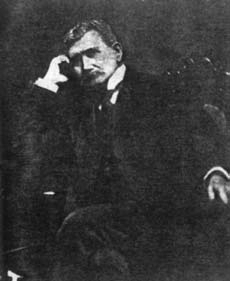
Fermanagh Times November 4th 1915.  MONSTER PIKE CAUGHT IN LOUGH ERNE.  The information reaches us from Kesh of the capture within the past few days of a pike which weighed 39 lbs in Lower Lough Erne off the mouth of the Kesh River. What makes the catch more interesting is the fact that it was secured by the ordinary method of fishing with rod and line from a boat, the lucky angler being Mr. P Keown of Portinode, Kesh.  It appears that but for the skilful handling of the boat by Mr. C. J. Keown, who is an expert oarsman and enthusiastic angler, it would have been impossible to land such a large fish. A according to the oldest fisherman in the locality it is by far the biggest pike ever taken from the Erne.

Fermanagh Times November 4th 1915.  SLIGO MURDER TRIAL.  GIRL SENTENCED TO DEATH.  Mr. Justice Dodds and a city common jury in the Four Courts concluded yesterday the trial of Jane Reynolds for the willful murder in Sligo on the 8th of December last of an Italian woman, Rose de Lucia,  the wife of an ice cream vendor, Angelo, who is awaiting trial on the same charge.  The motive which the Crown alleged was that Angelo de Lucia and Jane Reynolds were in love and conspired to do away with Mrs. de Lucia.  The jury, after half an hour, returned to Court, and in replied to a question by the foreman His Lordship said the girl would be guilty of murder if the jury found that she was present during the murder, and consented to death though she took no part in the actual murder. The jury again retired and after an absence of another half an hour, returned to Court with a verdict of guilty and a strong recommendation to mercy.  His Lordship, who was deeply moved, passed sentence of death, the execution to take place in Sligo Jail on 2nd of December next.  The prisoner here broke down and exclaimed, “I am innocent.  De Lucia killed his wife, have mercy on me”.

His lordship – “May the lord have mercy on you”.

Prisoner – “My Lord do not hang me.  Oh, my little child; my little child.” The Court was then cleared.

Fermanagh Times November 4th 1915.  OBITUARY.  MR. J. C. C.  MASON, J. P.  Although he had reached the ripe old age of over 79 years the late Mr. J. C. Mason, J. P., Moy, Letterbreen, and appeared to his many friends to be in his usual health up until a few weeks ago.  Time, of course, was beginning to tell its inevitable tale on his physique, but all who knew him expected that he had still a good spell of life before him.  On Wednesday the 27th ult., however, he took suddenly ill, and although medical assistance was immediately procured very shortly afterwards passed away, heart failure being the immediate cause of death.  The deceased gentleman was well known throughout this part of Fermanagh; he was a prominent Nationalist, and took a leading part in the land agitation in bygone years, but was always honest and straightforward in his views, and thus gained a the esteem of both his political enemies and friends.  In 1894 he was appointed to the Commission of the Peace for the County, and for some years served on the Enniskillen Board of Guardians.  It is only a short time ago since we had to chronicle the death of his brother, Mr. F. Mason, who had reached the exalted position of the Speaker of the Legislative Assembly of Victoria, Australia. Of a kindly, genial disposition Mr. Mason was a very popular neighbour and made many friends among the Protestants in the district, and sincere sympathy has been extended to his son and three daughters in their bereavement.

Impartial Reporter.  November 4th 1915.  THE RIGHT TO CHOOSE A WIFE.  At the quarterly meeting of the Gweedore and Rosses Teachers Association, the following resolution was adopted – ‘that we, the young unmarried teachers of this association, regret to find out that in a certain locality a teacher must subject his choice of a wife to the censorship of his manager.  We fail to see how that manager can claim the power he exercises so drastically, for in this particular line of business every eye must negotiate for itself.’

Fermanagh Herald November 6th. 1915.  MEN OF FERMANAGH. A GREAT VOLUNTARY RALLY. NOW OR NEVER. YOUR FELLOW IRISHMEN AT THE FRONT WANT YOU.  Big recruiting meetings will be held as follows 4th of November Kesh; 5th of November, Fivemiletown; 6th of November Lisnaskea; 8th of November; Irvinestown; 10th of November Enniskillen 11th of November Lisbellaw and on the 12th of November Donegal. Bands of the Fourth Battalion Inniskillings (Fermanagh) will be in attendance. (Ed. Half page advertisement.)

Fermanagh Herald November 6th. 1915.  A COMING RECRUITING MEETING.  It was my intention to ignore Mr. Trimble’s peccadilloes for some time to come, as I had arrived at the conclusion that my readers were well able to understand Mr. Trimble’s frame of mind without my analysing it, and moreover I had intended to refrain from filling this column with the vagaries of Trimbilism, because of the fact that the wisdom preached by the Reporter is heeded by no one and on this account there were more important matters on which I could deliberate.  However I cannot resist writing a few words on a statement made in last week’s East Bridge oracle.  Judging by the writings, speeches, and conversations of Mr. Trimble one would conclude that he, and he alone, was the last word in politics, religion, literature – and recruiting.  In last week’s issue of his paper he has an article – a very malignant article – under the heading of “A Last Effort.”  In the course of this article – a diatribe against a recruiting meeting to be held in Enniskillen – he says THE FORMER RECRUITING COMMITTEE, BADLY MISMANAGED, DID NOTHING; AND IF WE ARE TO JUDGED BY THE LUKEWARMNESS OF, AND THE PAUCITY OF ATTENDANCE AT, AND THE PERSONNEL OF TUESDAY’S MEETING, WE CANNOT EXPECT MUCH.

Now this meeting was convened by Mr. John E Collum, H.M.L., to make arrangements for a big rally and thereby hangs a tale.  The fact that Mr. Collum called the meeting was quite sufficient for Mr. Trimble to write it down.  Had it been convened by Mr. McFarland, of “handy man” fame, we would have been greeted with columns of eulogy, and the meeting would, in Mr. Trimble’s perspective, have been associated with all that was grand, noble, and perfect in patriotism.

EAST BRIDGE STREET NOT THERE.  He says if we are to judge by the personnel of Tuesday’s meeting, we cannot expect much.  What does Mr. Trimble mean by the word personnel?  Does he know the meaning of it?  Here are the gentlemen who attended the meeting: – Mr. John McHugh, J. P., Pettigo, Chairman of the County Council, presided, and those present included: the Right Hon. Edward Archdale; Mr. John Collum, H.M.L.; Major Johnston, Captain W.  Nixon, and Messrs.  James O’Donnell, Brookeborough; Francis Meehan, John Maguire, Newtownbutler; John Nixon, D.L., Belcoo; J.  Porter-Porter, D.L., Belleisle; H. Kirkpatrick, Lisnaskea; J. F. Wray LL.B., Enniskillen; Felix Leonard, Belleek; H. A. Burke, D.L.; E. M. Archdale, D.L.  Everyone will readily admit that the gentlemen who were present were representative of all shades of politics, and practically every district in the county.  But Mr. Trimble was not there.  And fact that the East Bridge Street Division of Enniskillen was not represented lowered considerably the social and political and intellectual status of the gathering.

  1. TRIMBLE’S ADMISSION. Let us pass on from this statement of silly and ignorant egotism. Having made of this charge against the gentlemen named, he says: – FOR OUR OWN PART, IT IS WELL KNOWN THAT WE HAVE BEEN CONCERNED IN BRINGING MANY MORE MEN TO THE ARMY, AND THAT WHATEVER OUR SHORTCOMINGS MAY BE IN OTHER RESPECTS, OUR EFFORT IN THIS DIRECTION HAS NOT BEEN SURPASSED IN THE COUNTY FERMANAGH NOR APPROACHED BY ALL THE COMBINED EFFORTS OF THE RECRUITING COMMITTEE.

What strikes the average reader on perusing this sentence is the discovery that Mr. Trimble, on his own admission, has shortcomings.  He states that he has no shortcomings on the question of recruiting – but he has in other respects.  One of the other respects we will presume, is the maligning of Nationalists and Catholics – and Mr. Trimble has admitted it!  Wonders will never cease!

THE EXPLANATION.  The recruiting meeting which is to be held in Enniskillen shortly has been the cause of weeping and wailing in the Editorial sanctum of the Reporter because of the fact that Mr. Trimble has not been asked to speak.  The names of the speakers are: – Lord Lieutenant, Colonel Wallace, Joseph Devlin, M. P.; J. Collum, H.M.L.; J. F.  Wray, LL.B.; S.  C.  Clarke, solicitor; William Ritchie, George Whaley, E. M., Archdale, D. L., and others.  There are some names on the list that caused Mr. Trimble a pang, and were the cause of all the narrow-minded invective.  “Some men are born great some achieve greatness, and others have greatness thrust upon them.”  Mr. Trimble had visions of being the very lifeblood of this meeting, as he was born great, and could do great things, while others are having greatness thrust upon them, and according to Mr. Trimble, will be unsuccessful in even securing one recruit.  “We shall see what we shall see.

  1. E. M.

Impartial Reporter.  November 11th 1915. AEGEAN SEA DISASTER.  A BRITISH TRANSPORT SHIP SUNK.  The British transport Ramazan was sunk by an enemy submarine by a shell fire at 6.00 AM on the 19th of September of the island of Antecythera in the Aegean.  There were about 380 Indian troops on board of whom 75 were saved.  28 of the crew were also saved. A number of boats were smashed by shell fire.  The survivors reached Antecythera in their own boats that night and were kindly and hospital treated by the inhabitants.

Impartial Reporter.  November 11th 1915.  LORD KITCHENER HAS GONE ABROAD IN A NEW FUNCTION.  IT WAS FEARED HE HAD RESIGNED.  The public mind was greatly perturbed during the end of last week on learning that Lord Kitchener had left the War Office, and a great fear was that he had resigned his post as Secretary of State for War.  The rumour that had gone abroad was promptly denied. It is now learned that Lord Kitchener paid a visit to the French War Office that he may go further afield to the east.  There is reason to believe that Lord Kitchener mission of war is not entirely of a military nature.  His main task is to explore the whole field of that vast and complex area of warfare in the east and to coordinate the operations of the British armies in the Balkans, in Gallipoli, in Egypt and on the plains of Mesopotamia, while at the same time taking fully into account the important India aspect of that gigantic war situation.  Mr. Asquith is to be his successor.

Impartial Reporter.  November 11th 1915.  THE LAST CALL FOR RECRUITS TO AVOID CONSCRIPTION.  VOLUNTARYISM ON TRIAL WITH SOME SCATHING COMMENTS BY PROMINENT SPEAKERS.  The present recruiting campaign in Fermanagh has not been the success one would wish.  It had borne out the words of Colonel McCloughry, who at Kesh spoke of present recruiting methods as ‘a gigantic and expensive sham’ and Mr. E. M. Archdale, D. L. as the ‘Voluntary Humbug.’  The pipe band and the drums of the 4th Inniskillings (Fermanagh’s) took part in the tour under Captain Nixon.  The first meeting of the tour in County Fermanagh was held at Kesh and the reception meted out to the military and cold indifference of the young men of that locality was a bad augury for the present campaign.  There was a small crowd present to listen to the speeches, mostly old men and women but not above 50 in number.  It was said that there were a number of Protestant old men who evidently felt aggrieved that the Roman Catholics have not responded in Ireland in proportion to their population as well as the Protestant.  One farmer who has seven sons at home, when asked to send some of them to enlist replied ‘Damn the one I will send till the Nationalists ago.  Colonel McCloughry, Ederney said Lord Kitchener wanted 50,000 men from Ireland at once and the proportions from the registration districts of Ederney, Clonelly and Pettigo were 50, 18 and 25 respectively or 93 men between the ages of 19 and 45.  Considering the poor response as a result of previous meeting held he doubted whether they would get these men.  It was only his Majesty’s proclamation which induced him to take part in that meeting which he believed the hopeless.  Recruiting had been boycotted by the farmers and shopkeepers in rural districts and nowhere was this more pronounced than in that locality. (Kesh).  One party said we cannot join and leave those aggressive Orangemen behind to murder our people.  And the other, if we go the Nationalists will pinch our farms and shops.  The true reasons for the want of enthusiasm regarding the war were economic.  The people were enjoying a period of unparalleled prosperity.  Farmers were getting anything from 50 to 80 per cent more for their produce and shopkeepers were having their bills paid.

Fermanagh Herald November 13th. 1915.  THE RECRUITING RALLY.  MEETINGS IN FERMANAGH AND DONEGAL. KESH.  The Rt.  Hon.  Edward Archdale, P. C., presided at the recruiting meeting held at Kesh on Thursday.  The Chairman, who was well received, said that they had 272,000 men of military age in Ireland, and surely they could send 50,000 in answer to Lord Kitchener’s appeal.  Irish regiments had been doing very well both in France and at the Gallipoli Peninsula but their ranks had been depleted, and they wanted them made up again with Irishmen and Irishmen alone.  Thanks to the splendid work of the British Navy our country had been spared the horrors which were suffered in Serbia, Belgium, France, and Russia and it was in order to beat back the enemy that threatened their liberty that was why they were appealing for recruits that day.

Colonel A.  McCloughry, Ederney, said Lord Kitchener wanted to 50,000 men from Ireland at once and the proportion for the registration districts of Ederney, Clonelly and Pettigo were 50, 18 and 25 respectively for 93 men between the ages of 19 and 45.  Considering the poor response as a result of previous meetings held, he doubted whether they would get those men.  It was only his Majesty’s proclamation which induced him (the speaker), to take part in that meeting, which he believed the hopeless.  Were they are not taking part in a gigantic and expensive sham?  Recruiting had been boycotted by the farmers and shopkeepers in rural districts, and nowhere was this more pronounced than in that locality.  Antipathy, not apathy, expressed their feelings.  When he contrasted the martial ardour of 16 months ago with the frost there that day what could he say?  He could not say it was the want of courage, because that would not be true, nor did he believe in the seriousness of an old farmer who said to him, ”What, fight Germany, the only Protestant country in Europe.  (A voice – nothing of the kind.”  The people were driven to the last ditch and what was the defensive position?  One party said, “We cannot join and leave those aggressive Orangemen behind to murder our people,” and the other, “if we go the Nationalists will pinch our farms and shops.”  He had not much confidence in the apologists, but if they thought that any danger really existed it could be easily obviated by one party, the Unionists, sending 47 and the Nationalists 46 men.  (Hear, hear.)  The true reasons for the want of enthusiasm regarding the war were economic.  The people were enjoying a period of unparalleled prosperity.  Farmers were getting anything from 50 to 80 per cent more for their produce, and shopkeepers were having their bills paid.  However, this was the last chance so far as the voluntary system was concerned, and if they did not get the numbers of men conscription would be put in force.  He concluded by appealing to the farmers and shopkeepers to make the present rally a success.  (Applause.)

Mrs. Barton in a brief address, appealed to the young men to go out and protect the women.  They could not defend themselves, their place was in the home which they would keep, but they wanted the men to out and fight for them.

Lieutenant Kendrick said that he was sorry to see so many young men there that day in mufti when they should be fighting their country’s battles.  He would ask the farmers to get their sons to go, telling them it was their duty to help the boys in the trenches.  Applause.  Private Barton, Australian contingent also spoke. (Ed. A relative of the Bartons of Clonelly.)

Fermanagh Herald November 13th. 1915.  REV. CHARLES BYRNE, C. P., THE VICAR OF “THE GRAAN”, ENNISKILLEN, IS APPOINTED CHAPLAIN TO THE BRITISH FORCES.  He was born at June Giltown, Co., Kildare, and ordained at Mount St., Josephs, London in 1901.  For eight years he did missionary work in that city, and he was then transferred to Glasgow where he was chaplain to the infirmary for four years.  In 1914 he was appointed vicar of “The Graan” Enniskillen, where he remained until this year, when he with a number of others from the same Order, volunteer their services as chaplains for the army.

Fermanagh Herald November 13th. 1915.  THE COMING OF CHRISTMAS.  AN ADVANCE WORD TO OUR READERS.  We have begun preparations for our annual double number and invite the cooperation of our readers to make it excel even last year’s, Irish stories, Irish sketches, Irish articles, Irish poems, and Irish legends which admittedly beat all records in a Christmas publication in Ulster.  One Guinea will be awarded to the writer of the best original story in English.  This contribution must be a real living story of Irish Life and must not exceed 1800 words.  Four prizes, one of five shillings and three of half a crown, are offered for the best numerous storyletters written on postcards.  None larger will be considered.

Fermanagh Herald November 13th. 1915.  PRIESTS IN THE TRENCHES.  It is estimated that there are between 60,000 and 70,000 priests engaged in one capacity or another at the various fronts, says the Weekly Dispatch.  Of these from 10,000 to 20,000 are in France actually fighting in the trenches.  Such scenes must have burnt themselves in the memories of all who witnessed them.  But even these do not make so great an impression as the deeds of personal heroism accomplished by the chaplains.  The death of Fr. Finn, chaplain of the 1st Dublin’s, is a typical example.  It was on the occasion of one of the landings at the Dardanelles, under heavy machine gun fire.  He saw some Tommies fall on the beach and asked for permission to go down to them, getting hit in the shoulder as he ran down the gangway of the liner, the River Clyde.  Bleeding profusely, he managed to crawl to the men, to whom he managed to administer extreme unction.  Hardly had he finished however when a bullet caught him in the head.  Before help could be got he had expired, his last words being, “Are we winning boys?  Are we winning? “ Fr. Lane Fox, of the London Irish is described in another letter as actually taking part in the famous charges at Loos, absolving those who were shot as they fell and arriving in the German trenches along with the battalion.

Fermanagh Herald November 13th. 1915.  MR. E.  HUGH ARCHDALL, SECRETARY TO THE FERMANAGH COUNTY COUNCIL, Enniskillen, has received the following message of condolence from their Majesties the King and Queen on the death of his brother, Major Nicholas James Mervyn Archdall, 5th Queen’s Own Cameron Highlanders, who was killed in action in the recent great British offence in France: -Buckingham Palace, – E.  Hugh Barton, Esq., Drumcoo, Enniskillen, – the King and Queen deeply regret the loss you and the Army have sustained by the death of your brother in the service of this country.  Their Majesties truly sympathise with you in your sorrow.  – Keeper of the Privy Purse.

Fermanagh Herald November 13th. 1915.  EMIGRATION TO AMERICA.  SCENES AT LIVERPOOL.  Exciting scenes were witnessed in Liverpool on Saturday outside the of the Cunard offices when a party of young Irishman were emigrating to America, says a Press Association telegram.  About 650 of these emigrants arrived in Liverpool from Holyhead early this morning, and proceeded to the Cunard offices for their passes for a ship which sails this afternoon, the men having booked their passages in Ireland.  The queue of emigrants entered the office.  At tremendous crowd assembled and taunted the emigrants with unpatriotism.  The crowd surged around them, calling them “Cowards” and asking them to show some pluck.  The police had to keep the crowd back.

THE ACTION OF THE SAXONIA’S CREW.  The Liverpool correspondent of the Freeman says – a dramatic development occurred shortly before noon on Saturday when the crew of the Curnarder Saxonia, held a meeting amongst themselves, conveyed to their Captain their determination not to sail for in the ship if the fleeing emigrants were permitted to come on board.  This decision was at once communicated to the Cunard directors, who, for once, found themselves in entire agreement with a resolution taken by the crew, and decided not to allow any men of military age to set foot on the steamer.  This step was taken avowedly in the interests of the country.  The information to the emigrants naturally caused much chagrin, and even dismay.  Its effect, however, was softened by the announcement that all those who desire would have their passage money returned.  They thereupon trooped back in a body to the Cunard Offices, and the process of repaying them was proceeded with, after which they disappeared fifth.

A GREAT MISUNDERSTANDING.  One of the Irish men interviewed declared that very few of those whom he knew were eligible: and he added: – but that apart, how many of our families have laid down their lives in this fight against the German militarism?  I had two brothers killed in landings at Gallipoli and the third at Suvla Bay and I can introduce you to scores of us who have given at least one member of the family to Britain since the war started.  That people in Ireland have joined the colours in remarkable numbers, and our record is one all Britain should be proud of.  In addition to that, there is hardly one of us sailing today but would have done so if there had been no war.  As a matter of fact, we would have sailed earlier, only with so many of our folks joining the ranks we had to wait at home and struggle all the harder to save all the money to enable us to get to America, where all our relatives are.  The rash statements that are being made as to the object we have in sailing are due to a great measure understanding.

MANY YOUNG ENGLISH SLACKERS.  The passport department of the Foreign Office is crowded daily, and all sorts of excuses are being offered by the young English slackers anxious to go abroad.  The average number of passports issued before the war was about 30 a day; the applications now are near 500.  Many of the applicants have discovered relatives in the United States or some other part of the world says the London Evening News, and in over 300 instances fit men of military age, have given seemingly satisfactory reasons for being granted passports, have been put back to allow the Government to consider what shall be done in the matter.

Fermanagh Times November 18th 1915.  THE DEATH OF LIEUTENANT COLONEL G. H. C. MADDEN.  Very profound regret was occasioned in Clones and district on Saturday, when it was learned that Lieut. Colonel Gerald H. C.  Madden who had commanded the 1st Battalion Irish Guards had died as the result of the terrible wounds he had received in the fighting near Bethune on the 11th of October.  Readers of this column will remember that the late officer had to have his left leg amputated above the knee in a Calais hospital.  On the 5th inst. he had so far recovered that he was removed to hospital in London where, to the general regret of a host of military and civilian friends, he succumbed.  He was a brother of Lieut. Colonel P.  C.  W.  Madden, D. L., Hilton Park, Clones, who is in command of the 4th Battalion Royal Irish Fusiliers, Victoria Barracks, Belfast.

Fermanagh Times November 18th 1915.  Much sympathy is felt in Newtownbutler and district with Mrs. Hannah Elliott, who has been notified that her husband, Private William James Elliott, 11675, Scottish Rifles was killed in action in Flanders on September 25th.  Around Lisbellaw and neighbourhood this notification has also been learned with widespread regret as deceased was the third son of Mr. Forster Elliott, Lisbellaw, who has two other sons in France.

Fermanagh Times November 18th 1915.  A DOUBLE TRAGEDY IN FERMANAGH AS THE SILLIES RIVER CLAIMS TWO VICTIMS.  The most distressing drowning fatality involving the lives of Mrs. Sarah Flannigan, aged 70 years, a widow, of Corr, and Miss Lucy Anna Elliott, her niece, aged 18 years of Rossculton, occurred on Thursday evening some miles from Enniskillen at the Sillies River. How the accident actually occurred is enveloped in impenetrable mystery.  It has been gathered that Mrs. Flanagan went to visit her brother, Robert Elliott who lived ½ mile distant.  She crossed the river as a shortcut at a point where it is 20 yards wide, a man named William Henry Eaton rowing her across.  When she returned about four o’clock in the evening, Miss Elliott went with her to row her back across the river, and, as she did not return after some time her friends went in search of her.  No sign of either was found or a boat could be seen.  The matter was reported to the police at Carngreen Barracks that night but as the river was in a flooded condition and darkness had then set in they could make no effort to search for the bodies then but later in the following day both bodies were recovered.

The funeral of Mrs. Flanagan, which took place on Sunday to Monea was very largely attended, there being no fewer than 57 cars besides those on foot.  The Rev. W. B. Steel officiated at the graveside.

The remains of Miss Eliot were laid to rest in Monea Churchyard on Monday, and the funeral was of very large proportions.  The customary Pilgrims Service, with hymns, was conducted at the graveside and was taken part in by Messrs.  B.  Donaldson, Derrygonnelly; John West, Crocknacrieve; James Bothwell, Monea; John Dane, Tuberton, and a number of other Pilgrims from the surrounding districts.

Impartial Reporter.  November 18th 1915.  On Saturday Lieutenant Colonel Gerald H.  C.  Madden, late officer commanding the 1st Batt., Irish guards who had been severely wounded in the fighting near Bethune on the 11th of October died after he had his leg amputated above the knee in the base hospital at Calais.  He had so far recovered that on Friday the fifth he was removed to Princess Henry of Battenberg’s Hospital, Hill Street, London where it was thought his chances would be better.  He was terribly upset by the journey across but rallied after a time.  However his constitution was unable to bear the strain of so many shocks and he unfortunately succumbed as stated.

The deceased was a brother of Lt. Colonel J. C. W.  Madden, D. L., Hilton Park, Clones now commanding the 4th Batt. Royal Irish Fusiliers at Victoria Barracks, Belfast, and brother in law of Major the Marquis of Ailesbury, D.S.O.  He has been warmly congratulated on the splendid conduct of his battalion by Major General the Earl of Cavan, C. B., doubt, M.V.O., commanding the Guards Division who expressed ‘his deepest and truest gratitude for your splendid services.’

The remains of the late Lieut-Colonel G.H.C. Madden arrived at Clones from London on Monday and were met at the station by a guard of honour of the R.I.C. under District Inspector M. J. Egan, Clones, and a large attendance of the townspeople of all classes.  Some magnificent wreathes accompanied the coffin.  All the shops were closed and the blinds drawn as a mark of respect.  The remains were taken to Hilton Park, Clones, from which the funeral took place on Wednesday at 12.00 with full military honours.  The internment took place in the family vault at Currin Parish Church, Scotshouse, Clones.

Fermanagh Herald November 20th. 1915.  ACCIDENT NEAR PETTIGO.  CASE DISMISSED AT QUARTER SESSIONS.  James Spence, Clonelly, sued Miss Emily Athill for damages in respect of a cow, the property of the plaintiff, which, it was alleged, had been killed by a pony and trap driven and owned by Miss Athill.  Mr. Spence gave evidence to the effect that some 8 cows belonging to him were being driven out of a field when a pony and trap driven by Miss Athill, who was coming from the direction of Pettigo, drove among the cattle and so injured one of the animals than a died some time later.  The shafts of the trap ran against the ribs of the cow, the injuries resulting in mortification.  The cow was worth £20 or more.  Cross examined he said that the incident took place on the 14th of June and the cow died on the 23rd of October. Miss Athill in evidence said that the point of the shaft struck one of the animals and having passed by the herd she looked back and saw the animals were moving along as if nothing had happened, and at the time witness was not aware that she had done any injury as the drovers did not call after the car.  It was an Iceland pony she was driving.

Fermanagh Herald November 20th. 1915.  AT LISBELLAW ON LAST THURSDAY, BEING THE OCCASION OF THE HIRING FAIR a recruiting meeting was held.  Lieutenant Kennedy having given figures as to the number and percentage of recruits required said that the percentage required from Ireland under the latest scheme was 1,100 men a week.  Considering the number of eligible young men who were still in the country, he was sure that would be easily forthcoming.  Some people said that Ireland had done her share: but the speaker declared that Ireland taken as a whole, had not done well enough.  The Lord Lieutenant had said that the number of men engaged on work not connected with the war was 260,000.  Of that number a large number of young men were of the shop-keeping class – the young men who stood behind counters measuring half-yards of cloth and giving out pints of porter.  (Cries of they are cowards.)  It was a shame that they should be allowed to walk about at such a time. (Cowards.)

Fermanagh Herald November 20th. 1915.  FERMANAGH BOATING TRAGEDY.  TWO WOMEN DROWNED.  Quite a sensation was occasioned in Enniskillen on last Saturday when it became known that on the previous night about 9.15 o’clock, Mrs. Sarah Flanagan, residing in Carnagreen, and aged 70, and her niece, Miss Lucy Anne Elliott, aged 18 years, living at Rosscultan both lost their lives in the Sillies River.  From the enquiries made it would appear that the elder lady desired to pay a visit to her brother, Mr. Robert Elliott, who lived not far from her own residence.  In order to reach her brother’s house, it was necessary she should cross the Sillies River on the outward journey.  She was rowed across the river at the point where it is some 20 yards wide, by Mr. William H.  Eton.  When returning, Miss Elliott went with the old lady to row her across the river.  They departed, and when the young lady did not return, a search party was organized but no trace of either woman or of the boat could be seen.  The spot where it is presumed the boat crossed is nine feet deep, and consequently in the recent heavy rains was very much swollen.

Fermanagh Herald November 20th. 1915.  The death of Lieutenant-Colonel Madden.  News was received on Saturday afternoon in Clones of the death of Lieutenant-Colonel Gerald H. C. Madden, 1st battalion Irish Guards who was severely wounded in the fighting near Bethune, on the 11th of October, and afterwards had his left leg amputated in the Base Hospital, at Calais.  He had recovered to such an extent that on Friday the 5th inst., he was removed to the Princess Henry of Battenberg’s Hospital, Hill Street, London, and although terribly upset by the journey, he rallied somewhat, and there was reason to hope he would soon get strong.  However his constitution was not equal to the strain.

There deceased was a brother of Lieutenant-Colonel John Madden, D.  L., Hilton Park, Clones, Co., Monaghan, now commanding the 4th battalion Royal Irish Fusiliers at Victoria Barracks, Belfast, and a brother-in-law of Major the Marquis of Ailesbury, D.S.O.  Major-General the Earl of Cavan C.B., M.V.O., in a letter to Colonel Madden, after he had been wounded, congratulated him on the splendid conduct of the battalion he commanded and expressed his deepest and truest gratitude for this officer’s splendid services.

Fermanagh Herald November 20th. 1915.  MR. REDMOND LEAVES FOR THE FRONT.  London, Wednesday morning, Mr. John Redmond has left on his visit to the Irish troops at the front.  He is accompanied by his private Secretary, Mr. T. J.  Hanna.

Fermanagh Herald November 27th. 1915.  AT DUNGANNON PETTY SESSIONS A FERMANAGH CLERGYMAN IS FINED FOR MOTORING WITHOUT A LICENCE.  The Rev. James Wilson, Tempo, Co., Fermanagh, was charged with reckless driving of a motor car on the public streets in Dungannon; secondly driving at a dangerous speed; thirdly with driving a motor car not having a licence to do so, and fourthly with driving a motor car and not using proper precautions by blowing the horn so as to safeguard the public.  He had also knocked down a young lad named Patrick Hughes, Ann Street.

Fermanagh Herald November 27th. 1915.  FERMANAGH RECRUITING INCIDENT.  A mild sensation was occasioned in the village of Ederney on last Thursday night.  The recruiting party at present touring Fermanagh, and having their headquarters at Enniskillen, decided to hold a recruiting concert in Ederney.  Accompanied by a band, the officers left Enniskillen.  On arrival at the village the band paraded the street for a short time and later repaired to a hall owned by a gentleman named Mr. Irvine, where it was understood the concert was to be held.  A large crowd were waiting for admission, but on the officers applying for admission, they were informed by the porter, who was in possession of the key, that Mr. Irvine had given instructions that no concert was to be held in his hall, because of the fact that the military authorities had not applied to him for permission to use the hall.  The performers and officers had therefore no other alternative but to abandon the concert.  Hearing this discussion some members of the local branch of the Ancient Order of Hibernians placed their commodious hall at the disposal of the military and a very successful concert and recruiting meeting was held.  Most of the officers of the recruiting party are Nationalists, and the owner of the hall is a prominent Unionist.  There is much comment on his refusal to grant of the use of the hall.